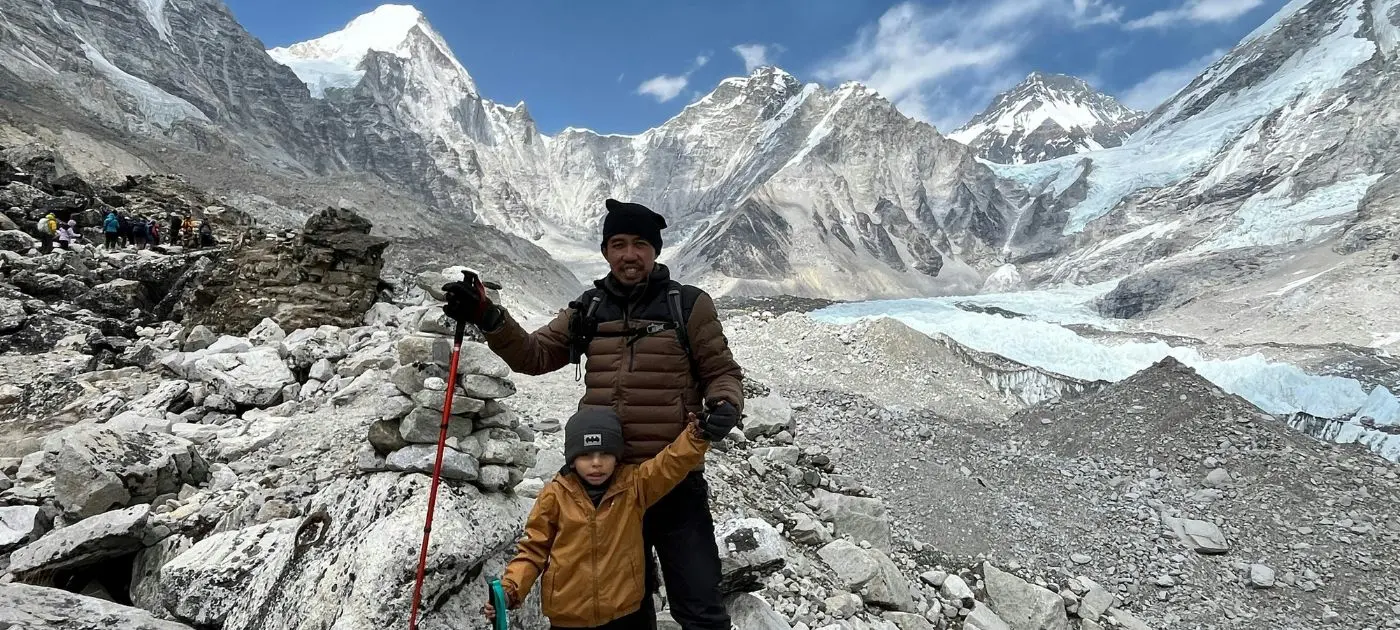
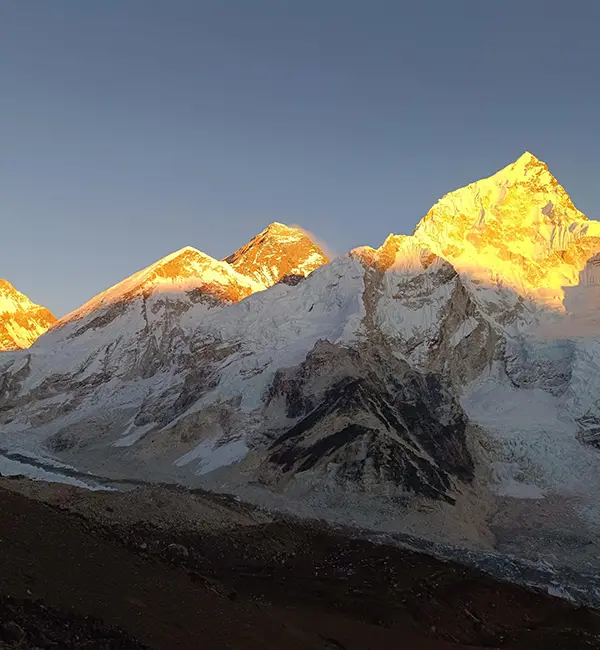
The Everest Base Camp trek is a high-altitude walk in the Himalayas, one of the greatest mountain ranges on Earth. Trekking to Everest Base Camp is not the same as climbing Mt. Everest. The EBC trek is achievable for most humans and can be done under USD 1,500 per person.
We, Adventure Magic Treks, welcome many travelers from around the world who dream of completing the Everest Base Camp trek. This trek is possible throughout the year, but there are two seasons that are more favorable than the other, i.e., spring and autumn.
Although the mountains and villages remain the same, the overall trek experience differs in each season. So, picking the right time to trek to meet your expectations is important.
Nepal has four distinct seasons, each with its own advantages and disadvantages. You have to make some compromises in every season. But the question is, what are you ready to compromise and what not?
We will provide all the information on the Everest Base Camp trek weather, temperature, climate, and trail conditions in each season in this blog.
Let's start with the basic information…
- The best time for Everest Base Camp trek is spring (March to May) and autumn (September to November).
- Summer/monsoon (June to August) and winter (December to February) are offseasons for the Everest Base Camp trek.
Must know:
- Given the high altitude and location of the Everest Base Camp, many of you must think that it is cold throughout the year in the Everest region. Well, it is partially true. The higher you ascend above the sea level, the colder the climate will get, but the level of cold significantly varies from one season to another.
US$1350US$1450
Trekker's ChoiceWhy are spring and autumn the Everest Base Camp trek best time?
Spring and autumn offer favorable weather and climate to trek to Everest Base Camp. Clear skies, stable weather, and pleasant climate make trekking less challenging in these two seasons. You will enjoy a comfortable temperature for trekking long hours and breathtaking mountain vistas.
Spring (March, April, and May): the season of flowers
Spring brings life back to the Himalayas. The snow fades away from the trails, and the foothills of the Everest region bloom with rhododendron and many other wild flowers.
The mountain views are crystal clear, and the climate begins to warm up. Trekkers begin to return to the Everest Base Camp trail at the start of March.
The crowd remains less in March, but with April and May, thousands of travelers from all around the world visit the Everest region to do the EBC trek and other treks.
The visibility is great in spring. The mountains look especially stunning in this season because they are well covered with a thick blanket of snow, thanks to the winter season.
Everest Base Camp trek temperature in spring
In March, there can be occasional rainfall, which indicates winter is coming to an end and the climate will warm up slowly. The temperature ranges between -15°C and 25°C.
In March, the temperature stays around 15°C. By April, the temperature increases to an average of 18°C to 22°C. In May, the temperatures rise up to 25°C. Lower elevations are warmer than the upper altitudes.
Autumn (September, October, and November): the season of festivals in Nepal
Autumn usually begins towards late September in the hills and plain parts of Nepal, but the Himalayas begin to settle down from the beginning of September.
This post-monsoon period is great to enjoy a fresh environment, crisp air, and breathtaking mountain vistas. Rivers, streams, and waterfalls are in the best condition.
The greenery is also excellent, but as November starts, the green leaves turn yellow and orange. It creates a magical landscape all over the Himalayas.
Another great thing about trekking to Everest Base Camp in autumn is that trekkers get to experience the biggest Nepalese festivals. Dasihain, Tihar, and Chhath, all three big Nepali festivals, are celebrated in autumn.
You just have to align your trekking dates to experience the festivals firsthand. The mountain views and the daylight hours are also fantastic in autumn.
Everest Base Camp trek temperature in autumn
There can be occasional rainfall till the mid of September in the lower altitudes. The temperature ranges between 17°C and 20°C at lower elevations.
As you ascend over 4,000 meters, the temperature may drop as low as -15°C, especially in November. Overall, the temperature stays around 10°C to 15°C during the daytime, which is great for trekking.
Night and morning will be comparatively colder. As November approaches, the temperature begins to drop, signaling that the winter season is around the corner.
Challenges of the Everest Base Camp trek in spring and autumn
Although spring and autumn are the peak trekking seasons, there are also a few drawbacks to trekking in these two seasons. And one of the biggest drawbacks is the crowd.
You cannot comprehend how famous the Everest Base Camp trek is and how many people aspire to do this trek worldwide. The highest number of trekkers visit the Everest region to do the EBC trek in spring and autumn.
There can be 200 trekkers or more at a time all over the EBC trail. Accommodation gets overpacked, and some trekkers end up spending nights in dining areas.
There can be occasional snowfall in early March and late May. Likewise, the region may see rainfall during early September. It happens because the seasons are in a transition period.
Everest Base Camp trek in the offseason: winter and summer/monsoon
The offseason is the time when the weather in the Himalayas is very unpredictable and unfavorable for trekking. The views are not clear in the offseason, and the trail is also not in good condition for travel.
There can be a sudden change in the weather anytime. You may experience snowfall or rainfall out of nowhere. Some days can be gloomy, too.
The Lukla flights and the helicopter flights are also highly affected due to unpredictable weather in winter and summer/monsoon.
Winter (December, January, February): the coldest time in the Himalayas
Winter is the coldest time of the year in the Himalayas. With the beginning of December, the climate begins to cool down. The temperature drops significantly as the days pass by. Winds get stronger, and snow falls all over the region.
The cold climate in winter can be challenging for many travelers. But if you love traveling in winter, the Everest Base Camp trek will be a magical experience in this season.
The biggest advantage of trekking to Everest Base Camp in winter is the empty trails. You do not have to worry about pre-booking the accommodation.
If you love peaceful trails, winter is the best time of the year to trek Everest Base Camp. The landscapes and mountain vistas are also mesmerizing in the winter season.
The Everest Base Camp trek in winter is possible, but there will be added challenges like cold, strong winds, gloomy days, and unclear views. But not every day is like this. Sunrises on most days, offering excellent views.
Everest Base Camp trek temperature in winter
Winter is a cold time, but the visibility is great. Fog may decrease visibility at lower elevations in the morning, but the upper part of the trail remains clear.
The sun keeps the daytime warm and comfortable, but you still need to dress well to bear the cold climate. As the sun sets, the temperature begins to drop. But you will be in the lodge by late afternoon, resting by the chimney, enjoying the warmth of the woodfire.
In winter, the temperature drops as low as -20°C at Everest Base Camp. In Lukla and Namche Bazaar, the temperature may fall to -8°C at night.
Summer/monsoon (June, July, August):
The summer and monsoon seasons coincide with each other. In June, the temperature is the highest. It is the peak of the summer season. Rain begins towards mid-July. There can be occasional rainfall in June as well if the climate warms up too much.
Between mid-July and August, rain falls frequently. The lower trails are ruined due to heavy rainfall. The trails become muddy and slippery. Landslide risks increase all over the hilly region.
Likewise, there is a high leech infestation on the trail. The climate is too hot and humid these months. On the good side, rivers, waterfalls, and streams are gushing with water, and the region is teeming with vegetation.
Trekking to Everest Base Camp between June and August is possible, but you need to be more strategic with your itinerary and departure date.
Everest Base Camp trek temperature in summer/monsoon
In Kathmandu and the lower part of the trail, the temperature increases significantly. Likewise, rainfall is also highest in Kathmandu and lower trails. In the upper region, rainfall decreases, but clouds dominate the sky.
The temperature rises up to 38°C in Kathmandu. In the lower part of the trail, the temperature ranges between 22°C and 30°C. Above 4,000 meters, the temperature may drop to -5°C at night.
Trekkers need to carry sturdy waterproof boots, waterproof layers, gaiters to protect from mud/leeches, and other rain gear.
Challenges of the Everest Base Camp trek in winter and summer/monsoon
- Rainfall makes the lower parts of the Everest Base Camp trail muddy and slippery. It also led to high leech infestation. Landslide risk also increases.
- The winter cold is extreme. The cold wind makes trekking challenging. Snow may fall at the upper part of the trails.
- The unpredictable weather in winter and summer/monsoon leads to frequent delays and cancellations in Lukla flights. Trekkers need to have 1-2 contingency days in their Everest Base Camp trek itinerary.
- Cold weather also increases the risk of altitude sickness. There is also a chance of frostbite.
- Mountain views may be obstructed on gloomy/cloudy days.
- The daylight hours are short in both winter and monsoon seasons.
Monthly breakdown of Everest Base Camp trek weather and climate
Below, we have shared the weather and climate conditions in each month.
Month | Trekking Conditions |
January | |
February | Cold climate, but the temperature begins to get better towards the end of the month Stunning winter landscapes High snowfall chance Peaceful trails
|
March | |
April | One of the best months to do the EBC trek Rhodoendron covered hills Stunning mountain vistas and landscapes Warm daytime High crowd Packed accommodations
|
May | End of spring season Warm temperature Occasional cloud Busy trails
|
June | |
July | |
August | Frequent rainfalls but gradually decrease towards the end of the month Muddy and slippery trails with leech infestation Obstructed mountain views Empty trails and greenery High humidity
|
September | September is the start of the autumn season, so the weather stabilizes Rainfall till mid-September Towards the end of the month, the weather gets excellent for trekking Less crowd
|
October | One of the best months to do the EBC trek Longest daylight hour Stunning mountain vistas and landscapes Busy trails Accommodations are overpacked Pleasant climate
|
November | Warm daytime and cold mornings/nights Climate begins to get cold Excellent views Most trekkers leave the trail by the end of November
|
December | |
How to pick the best time to trek Everest Base Camp for yourself?
Every trekker has a different expectation of the Everest Base Camp. So, the best time for Everest Base Camp trek may differ from one person to another depending on their preferences.
Ask yourself the following questions:
- What are your expectations in terms of views?
- Do you need perfect weather?
- Are you fine with crowded trails or would you like peaceful trails?
- What's your budget for the trek? (Accommodation rates are low during the offseason)
- Do you want to trek during the peak season or the offseason?
- When do you have a vacation?
- How long is your vacation? We have different EBC trek programs available, ranging from 12 to 18 days or more.
By answering the above questions, you can find out which season best meets your requirements and book the trek accordingly. Note that trekking in the peak season is not mandatory.
Although peak seasons mean you will enjoy the finest weather, climate, and views, there will also be crowds and overused services along the trail. You have to trade wisely.
Frequently asked questions about the best time to trek Everest Base Camp
What is the best time to trek to Everest Base Camp?
The best time to trek to Everest Base Camp is the spring (March to May) and autumn (September to November) seasons.
Is spring or autumn better for the Everest Base Camp trek?
Spring and autumn are both the best times for the Everest Base Camp trek. Spring carries the essence of flowers and life in it. Autumn is the season of festivals in Nepal. Both seasons offer excellent weather and climate.
Can I trek to Everest Base Camp in March?
Yes, you can trek to Everest Base Camp in March. The crowd is smaller in March, especially during the first week of the month. So, you will enjoy stunning mountain views and excellent weather with less crowded trails.
Is April a good time for the Everest Base Camp trek?
April has the best weather and climate conditions with very little chance of rainfall or snowfall. By April, flowers bloom all over the trail, so the trekking route is exceptionally pretty.
Is May too crowded for the Everest Base Camp trek?
The first two weeks of May are bust. Towards the third week, most trekkers begin to leave the Everest region, so the trails get lighter.
Can I do the Everest Base Camp trek in September?
Yes, you can do the Everest Base Camp trek in September. Note that there is a chance of rainfall in September, so Lukla flights may get disrupted.
Is October the best month for the Everest Base Camp trek?
Yes, October is the best month for the Everest Base Camp trek. The daylight hour is longest in October (up to 8-9 hours). Likewise, the views and weather are incredible.
Can I trek to Everest Base Camp in November?
Yes, you can trek to Everest Base Camp in November. It is one of the best months to do this trek. November has good weather, a pleasant climate, excellent visibility, and comparatively less busy trails.
Is the Everest Base Camp trek possible in December?
December is also a great time for the Everest Base Camp trek, even though it is the beginning of the long winter in the Himalayas. The climate slowly gets cold, but the sky is mostly clear with bright sunny days (most of the month). There can be a few delays in the Lukla flight, but you will be on your schedule.
How cold is the Everest Base Camp trek in winter?
Winter is the coldest time of the year in the Himalayas. The temperature goes below the freezing point. Snow falls in the upper part of the region, and there is also a chance of a storm. During the peak winter period, the temperature drops as low as -20°C.
Is the monsoon season bad for the Everest Base Camp trek?
Monsoon season has weather nuisances such as rain, poor visibility, and muddy trails. It is not the best time of the year to do the EBC trek because of added weather challenges, but it is also not a bad time, especially if you are fine with the rainy season and love the greenery.
When is the clearest mountain view on the Everest Base Camp trek?
April and October have the clearest mountain views on the Everest Base Camp trek. But you will also enjoy stunning mountain vistas in March, May, early June, late September, November, and early December.
What is the least crowded time for the Everest Base Camp trek?
Offseasons, winter, and summer/monsoon are definitely the least crowded times for the Everest Base Camp trek. You can also trek at the start or end of the peak trekking season to avoid crowds.
When is the cheapest time to trek to Everest Base Camp?
The Lukla flight rates and accommodation rates along the Everest Base Camp trek route are lowest in winter and summer/monsoon. So, these are the cheapest times to trek to EBC.
Is the Everest Base Camp trek safe during the winter months?
The standard Everest Base Camp trek is safe during the winter months, but you need to wear proper clothes to insulate yourself. However, if you are doing the 3 passes trek or the EBC trek with any pass, you have to check the pass condition before embarking on the journey.
What is the best time for photography on the Everest Base Camp trek?
All seasons are best for Everest Base Camp trek photography. It depends on what type of landscape you want to capture.
- Spring has blooming hills
- Autumn adds colors of festivity and perishing foliage
- Winter makes the Everest region magical
- Summer/monsoon greenery and rainy scenery have their own magic
When is the best time for the Everest Base Camp trek without flight cancellations?
If you do not want to deal with Lukla flight cancellations or delays, consider trekking in the spring or autumn seasons.
How does the weather vary by season on the Everest Base Camp trek?
- Winter is the coldest time of the year.
- Summer/monsoon is hot and humid.
- Spring and autumn are neither too hot nor too cold.
Is the Everest Base Camp trek open all year round?
Yes, the Everest Base Camp trek is open all year round.
What is the best time for a solo Everest Base Camp trek?
The best time for a solo Everest Base Camp trek is spring and autumn because you will have the company of travelers from all around the world. There will be people on trails to help you if you get sick or hurt.
What is the worst time to trek to Everest Base Camp?
There is no such thing as the worst time to trek to Everest Base Camp. Your trek experience can get worse even during the peak trekking season if you are not well prepared and supported by an expert team.
Final thoughts
You can trek to Everest Base Camp pretty much any time of the year with us. We, Adventure Magic Treks, handle everything related to the Everest Base Camp trek in all seasons. So, you can trek safely and hassle-free.
Whatever month you choose to do the Everest Base Camp trek, we will help you. We have tried our best to answer most queries about the Everest Base Camp trek best time through this blog.
But if you have any questions related to the best time for Everest Base Camp trek or want to book the EBC trek, feel free to contact us.
Check out our Everest Base Camp trek packages on this page.