

Highlights
- Embark on a lifetime spiritual journey to Mansarovar Lake and Mount Kailash
- Explore Nepalese culture, traditions, and historical sites in Kathmandu
- Enjoy stunning mountain vistas of Everest, Makalu, Cho Oyu, Sishapangma, etc, while driving to Mansarovar Lake
- Spend an acclimatization day in Kerung
- Learn about Tibetan culture and traditions
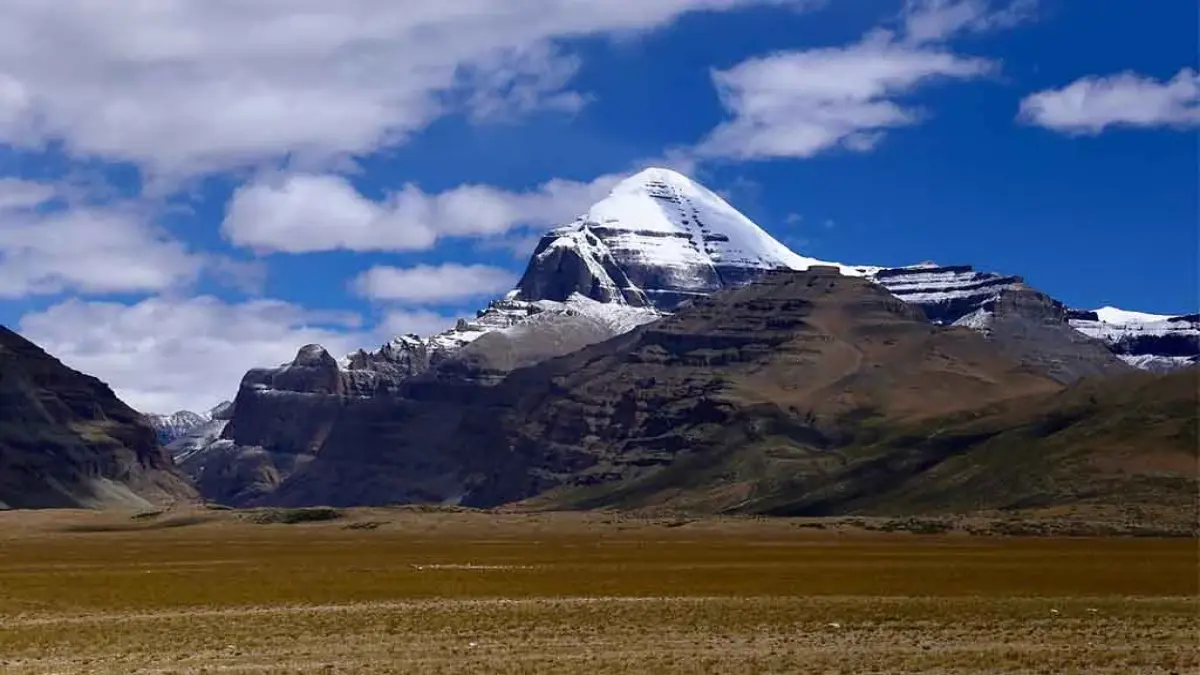
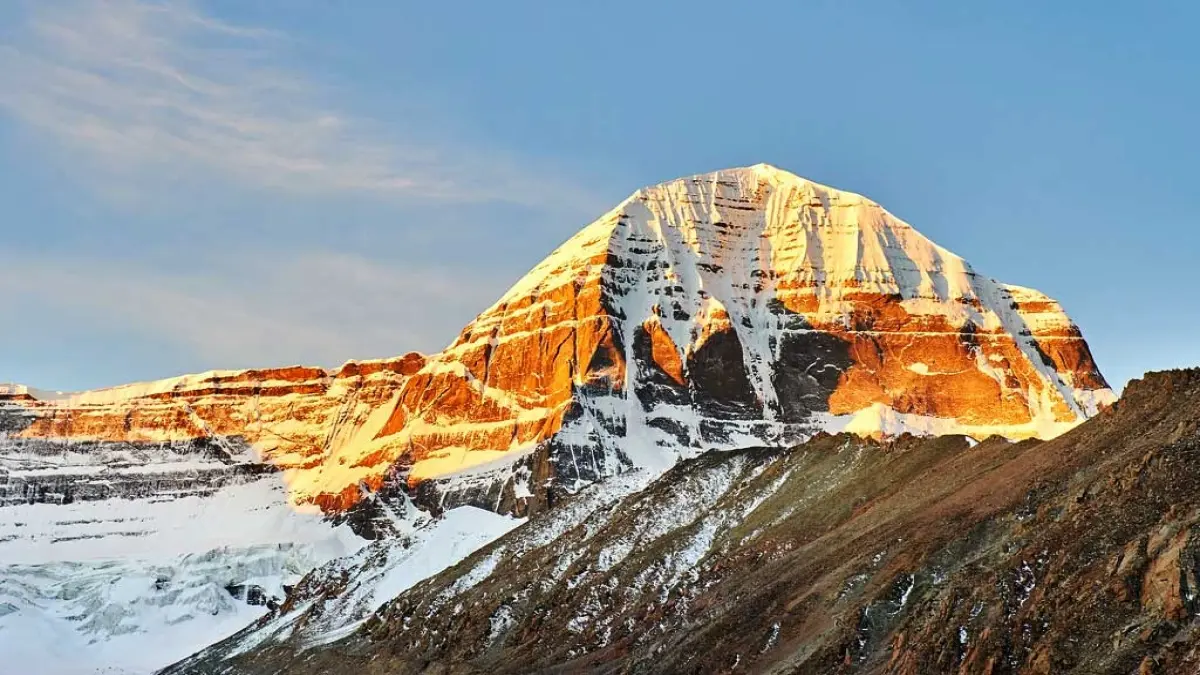
- Witness diverse landscapes and breathtaking views of Mt. Kailash, Nandi Parvat, etc
- Complete the three days of Kailash Kora
- Feel the immense power of Kailash and high spiritual energy during the tour
- A comprehensive Kailash tour package with full support and meticulous planning
Kailash Mansarovar tour introduction - overland trip from Kathmandu, Nepal
The trip begins in Kathmandu, Nepal. You will spend four nights in Kathmandu to apply for the Chinese Group Visa and obtain it. Then drive from Kathmandu to Timure and enter Tibet via the Kerung border.
Starting the Kailash Mansarovar tour from Kathmandu is highly recommended because the permit and visa process is much simpler than entering Tibet from any other country. On top of that, we will take care of all documentation, permits, and the Chinese group visa. So, you do not have to worry about anything.
Among all the Kailash Mansarovar routes, we highly recommend the Kerung route via Kathmandu because this route allows slow elevation gain. You will have ample opportunity to acclimatize and avoid altitude sickness during Kailash Kora.
Mount Kailash and Mansarovar Lake are nestled in the remote western reaches of the Tibetan Plateau. The Kailash Mansarovar tour is one of the world's most respected spiritual pilgrimages for Hindus, Buddhists, Jains, and followers of Bon.
The journey is equally adventurous and scenic as you travel across the high Tibetan plateau and enjoy outstanding mountain vistas and landscapes. The Kailash Mansarovar tour is an overland journey and includes Kailash Kora.
You will witness outstanding views of Mt. Everest, Mt. Cho Oyu, Shishapangma, Nandi Parvat, Ashtapad, Mt. Kailash, and many other mountains during the tour.
Kailash Kora, also known as Kailash Parikrama, is a three-day hike that starts at Darchen and ascends to Dirapuk and descends to Zuthulpuk via Dolma La Pass, creating a loop around Mount Kailash.
You will walk 51 kilometers during the Kailash Kora and reach 5,630 meters (Dolmala Pass) above sea level. During the Kora, you will stay at Dirapuk and Zuthulpuk.
Whether you are travelling solo, with your parents, friends, or loved ones, you can join our fixed departure Kailash Mansarovar tour 2026 and 2027 groups. We also organize private Kailash Mansarovar tours for big groups.
Kailash Kora
➤ YamDwar to DiraPuk: 17 km (10.5 miles)
➤ DiraPuk to ZuthulPhuk via Dolma La Pass: 22 km (13.6 miles)
➤ ZuthulPhuk to Zongdui: 12 km (7.4 miles)
The Kailash Kora starts and ends in Darchen. The path is well-established and not that tough to navigate. However, high altitude can make the walk slightly challenging.
The air is thin, and the oxygen level is low, so there is a risk of altitude sickness. This is why we take an acclimatization break in Kerung and gradually ascend to Mansarovar Lake.
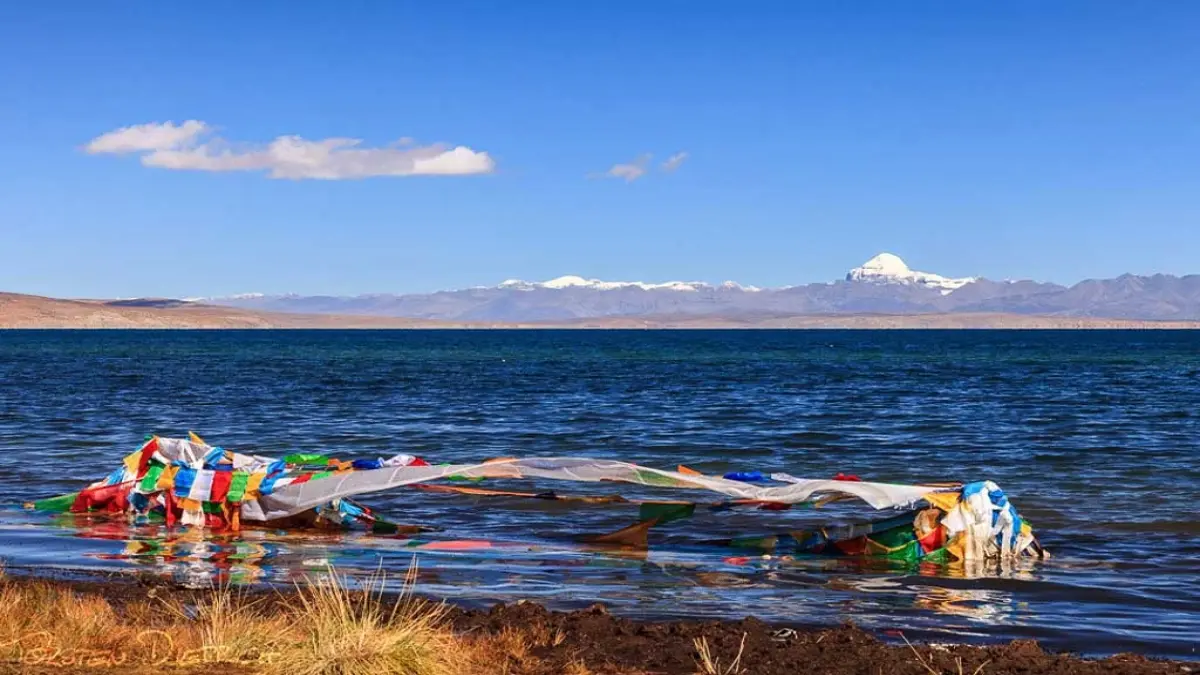
There are many prayer flags along the trail. You will also witness vast views of the Tibetan plateau and the Himalayan mountains, including Kailash, Nandi Parvat, Ashtapad, etc. You may also see prostration tracks made by pilgrims.
Buddhist, Jains, and Hindus do the Kailash Kora in a clockwise direction, but believers of the Bon religion follow an anticlockwise route. So, you may come across pilgrims coming from the opposite direction.
As you hike deeper into the mountain gorge, the view of Kailash becomes much more mystical and powerful. You will explore stupas and monasteries on the way. Dirapuk Monastery and Zuthulpuk Monastery are two major landmarks.
Crossing the Dolma La Pass (5,630 m) is the most challenging part of the Kora. It includes hiking at very high altitudes and steep, rocky terrain.
Why is the Kailash Mansarovar tour famous despite its remote location and high-altitude challenges?
The Kailash Mansarovar tour is not just a holiday. It is a once-in-a-lifetime journey that embodies deep faith, spirituality, liberation from your sins, and jaw-dropping mountain vistas and incredible landscapes.
Pilgrims travel deep into the remote Tibetan Plateau to reach Mansarovar Lake and Mount Kailash to seek blessings, inner peace, and spiritual renewal. It is believed that you only travel here when it is your turn, when the deities call you themselves.
There are many stories, myths, and controversies around Kailash, and this is what makes it a very unique place. Although each religion interprets its beliefs about Kailash in its own way, in the end, it all comes down to immense divine power, spiritual purification, and enlightenment.
Hindus:
Hindus believe that Kailash is the eternal home of Lord Shiva, the supreme yogi and creator of the Universe. According to legend, Shiva lives atop this mountain with his wife, Goddess Parvati.
Likewise, as per the ancient Hindu scriptures such as the Mahabharata, Shiva Purana, Skanda Purana, etc, Mt. Kailash is the spiritual axis of the universe. It is the place where heaven and earth meet.
Similarly, Mansarovar Lake was believed to be first created in the mind of Lord Brahma, one of the principal deities of the Hindu Trinity, alongside Shiva. Hindus believe that the water of this lake will cleanse their sins and lead them to moksha (liberation).
Buddhists:
For Buddhists, Kailash is known as Gang Rinpoche, which means precious snow jewel. They believe Mt. Kailash to be the abode of Demchok, a powerful tantric deity. He represents wisdom, supreme bliss, and the union of compassion and enlightenment.
Buddhist pilgrims believe that completing the Kailash Kora will help them get rid of their negative karma accumulated over countless lifetimes and gain immense blessings. Many pilgrims even do prostrations throughout the 51 km circuit.
The Saga Dawa festival is one of the biggest Tibetan Buddhist celebrations, held at Mansarovar Lake and drawing thousands of pilgrims.
Jains:
For Jains, Mount Kailash is closely associated with Ashtapada. It is a sacred mountain where the first Tirthankara, Lord Rishabhdev (Adinath), attained moksha.
Jain pilgrims emphasize meditation, self-reflection, ethical living, and liberation through inner purification, which is quite contradictory to other traditions.
For Jains, Mount Kailash is a place of serenity and contemplation.
Bon religion:
Bon religion predates Tibetan Buddhism. In Bon cosmology, Kailash is a sacred nine-story Swastika Mountain. It represents eternity, balance, and the origin of all spiritual knowledge.
Bon followers believe that Kailash is the dwelling place of Sipaimen, the Sky Goddess. For them, too, Kailash is the center of the Universe. They believe that the founder of the Bon religion, Tonpa Shenrab Miwoche, descended from heaven near Kailash.
Unlike Hindus and Buddhists, Bon followers do the Kailash Kora in a counterclockwise direction. It shows their own ancient cosmological beliefs and practices.
We can say that Mansarovar Lake and Mount Kailash are a sacred destination shared by humanity. If we move beyond the spirituality and holy position of Kailash, there are many fascinating myths, legends, and mysteries about this mountain.
For instance:
➤ Unclimbed sacred mountain: It is said that no one has ever officially climbed Mount Kailash. In the 1980s, Reinhold Messner was permitted to climb Kailash, but he declined, stating some mountains should remain unconquered out of respect for the millions of believers.
➤ The Center of the Universe: Many ancient traditions describe Kailash as the Axis Mundi or the Center of the Universe. In Hindu cosmology, Kailash is identified with Mount Meru, the mythical cosmic mountain that is believed to stand at the center of all creation.
➤ The Hidden Kingdom of Shambhala: Kailash is also connected with Shambhala. As per Tibetan Buddhism, Shambhala is a hidden kingdom where enlightened beings live. Ancient Buddhist texts describe this extraordinary realm as one that cannot be found and can only be accessed by those who achieve the highest state of spiritual realization.
➤ Time moves differently at Mount Kailash: One of the very intriguing rumors around Kailash is that time behaves differently near the mountains. Some visitors have reported that their hair or fingernails appeared to grow quickly during their time near Kailash.
➤ The Pyramid Theory: As a modern theory, Kailash is believed to be an enormous ancient pyramid built by an unknown civilization. The mountain's striking symmetry, smooth rock faces, and four nearly cardinal-facing sides support this theory. However, geologists reject this claim, making it another controversy.
➤ The source of four great rivers: It is not a myth or a story but a fact that Mount Kailash is the source of Asia's four great rivers - the Indus River, Sutlej River, Brahmaputra, and the Karnali River.
Kailash Mansarovar tour best time
The best time to do the Kailash Mansarovar tour is from May to October. May, June, July, August, September, and October have the most favorable weather conditions, and Kailash Mansarovar is accessible via road. In other months, the region remains closed for travelers due to safety reasons.
Between May and October, the sky is clear, and the temperature is pleasant. You will see stunning snow-covered mountains and excellent landscapes. July and August are the warmest months and also the peak pilgrimage season.
Although Nepal and India see high rainfall in July and August, the Kailash Mansarovar region (northern Tibet) is not that affected by the monsoon. It is because Kailash Mansarovar lies in the rain shadow of the Himalayas. There can be occasional light rainfall, but it will not affect the journey or the road conditions.
Once you enter Kerung, you will not be affected by monsoon rain. With the beginning of September, the weather gets even better. Crisp air, fewer crowds, and excellent visibility make September the finest time for the Kailash Mansarovar tour.
If you want to experience the Saga Dawa festival, you have to do the Kailash Mansarovar tour in May or June. It is celebrated as per the Tibetan Lunar calendar. Note that in May, there can be snowfall.
From November to April, the weather is very unstable, and the climate is cold. Heavy snowfall blocks the road. The temperature is freezing, and visibility is poor. So, the government does not issue permits.
Kailash Inner Kora and Outer Kora, what's the difference?
The Inner Kora of Kailash takes you to sites such as Nandi Pass, Charan Sparsh, Selung Monastery, Saptarishi Cave, 13 Golden Chortens, and Ashtapad.
It covers 34 kilometers, and you do the Inner Kora of Kailash in one day. Compared to the Outer Kora, the Inner Kora is also technically challenging and requires a special permit and additional technical guide.
On the other hand, the Kailash Outer Kora is the standard 3 days Kora covering around 51 km. The Outer Kora includes places such as Dirapuk, Dolma La Pass, and Zuthulpuk.
Is the Kailash Mansarovar tour 16 days suitable for you?
The Kailash Mansarovar tour is a high-altitude journey that takes you above 5,500 meters. Apart from the Kailash Kora, the rest of the trip is an overland tour, which will be easy.
The biggest challenge of the Kailash Mansarovar tour 16 days is the high altitude. You will experience comparatively less oxygen than at sea level. So, travelers with heart conditions, diabetes, asthma, and high blood pressure should consult their doctor before signing up for the Kailash tour.
Pregnant women should also consult a doctor for the Kailash Mansarovar tour.
If you are below 18 years old, you must do the Kailash Mansarovar tour with your parents or an identified guardian.
The Kailash Mansarovar overland tour is suitable for:
- All ages of travelers, including senior citizens.
- Travelers who can walk 5 hours a day on average. Those who cannot walk can hire a horse with a horseman (extra charge applies) to complete the Kailash Kora.
- You can also skip the Kailash Kora completely. However, you have to wait at Darchen for the group. You cannot return to Kathmandu on your own.
- Travelers who have the willpower and determination to push themselves.
- You do not have to be super fit to complete the Kailash Kora. We have seen even not-so-fit individuals complete the Kora solely because of their faith.
Kailash Mansarovar tour preparation
➤ Booking: The first thing you have to do is book the trip on time because once you miss the booking window, acquiring the permits may not be possible. We recommend you book the Kailash Mansarovar tour at least 1-2 months before your intended departure date.
➤ Physical preparation: Exercise daily. Focus on improving your stamina and strength. Long walks, cycling, swimming, stair climbing, and strength training are great choices. Make sure your workout plan is more cardio-intensive and consistent.
➤ Mental preparation: Learn about the Kailash Mansarovar route, facilities, and challenges. It will help you set the right expectations and be well prepared. Also, make up your mind about a cold climate.
Kailash Mansarovar tour cost and booking 2027
The Kailash Mansarovar tour price is comparatively lower in Nepal than in other countries. In addition, the support and service you will receive will be incredible.
Our Kailash Mansarovar tour cost starts at USD 2,550 per person. Depending on your group size, you will get a discount per head. The bigger your group is, the higher the discount you can expect.
Bookings are open for Kailash Mansarovar tour 2027 departure. Contact us for more information.
What’s included in our Kailash Mansarovar tour cost:
- Kailash Mansarovar tour permits
- Chinese Group Visa
- Three meals a day and nice accommodation in Tibet
- Accommodation with breakfast in Kathmandu
- Local guide and porter
- Comfortable four-wheeler and skilled driver
- First aid kit with oximeter
Travelers have to pay for Nepal tourist visa, travel insurance, international flights to/from Kathmandu, tips, lunch and dinner in Kathmandu, shopping, and other personal expenses themselves.
Kailash Mansarovar tour package from Nepal
If you are looking for the Kailash Mansarovar tour package from Nepal, this package is one of the best options.
We also have a Kailash Mansarovar tour from Lhasa option that also starts and ends in Kathmandu.
Alternatively, travelers can also do a Kailash Mansarovar helicopter tour with us if they want to reduce the travel period.
Traveling to Kailash is not easy. It requires meticulous planning, extensive support, and expertise. Even if you have the money, you need the right travel partner to make your journey hassle-free, safe, and comfortable.
Adventure Magic Treksis one of the most reliable and trusted travel partners for the Kailash Mansarovar tour in Nepal. They have been organizing this tour for many years.
They know what to do and what travelers seek. So, traveling with them is stress-free. You will have full support during the Kailash Mansarovar overland tour. There will be a Nepali and Tibetan guide traveling with you.
It ensures your safety and no communication gap. We have experience in leading people of all ages to Mansarovar and Kailash. So, whether you are traveling solo, with your kids, or with elderly members of the family, you can trust us.
We provide:
- Many years of our expertise and knowledge of the Kailash Mansarovar tour
- A reliable, trained Nepali and Tibetan team throughout the tour
- We handle documentation, permits, and Chinese Group Visa
- Comfortable four-wheeler and skilled driver
- Strategic acclimatization stops
- High safety priority
- Best hotels and guesthouses during the tour
- Pure vegetarian meals with unlimited water
- No hidden charges
- Free duffel bag to use during the tour
- 24/7 support
- Private Kailash Mansarovar tour option with customization flexibility