

Lobuche Peak Climbing with Everest Base Camp Trek
Debuche-village.jpg

Lobuche Peak Climbing with Everest Base Camp Trek

302 Reviews in Trip Advisor
9 Reviews in Google Reviews

The Lobuche Peak Climbing with Everest Base Camp trek is a very adventurous and thrilling journey in the Himalayas of Nepal. This trip combines trekking to the lap of Mount Everest (the tallest mountain in the world) and climbing a 6,119-meter-tall mountain.

Lobuche Peak has two summits, Lobuche East (6,119 m) and Lobuche West (6,145 m). The east peak is known as a trekking peak and does not require an expedition-style Ji approach.

As the technical challenges are nominal on trekking peaks in Nepal, they are known best for beginner climbers who are interested in climbing. You can slowly build your climbing and high altitude knowledge with peaks like Lobuche.

Simillary, the Lobuche Peak Climbing is also great for acclimatization before bigger mountains. You can climb Lobuche Peak between March and May (spring) and September and November (autumn).

Our Lobuche Peak Climbing with EBC trek bookings are open for 2026 autumn departures. You will get the best Lobuche Peak Climbing with the Everest Base Camp trek cost and service with Adventure Magic Treks.

We remove the hassle of acquiring permits and arranging logistics. Likewise, you will climb the peak with reliable Sherpas and mountaineers who have summited this peak several times before.

Duration
16 Days
Trip Grade
Very Streneous
Country
Nepal
Maximum Altitude
6,119 m/20,075 ft
Group Size
1-10
Starts
Lukla
Ends
Lukla
Activities
Trekking & Climbing
Best Time
Spring & Autumn

Highlights

  • Be part of one of the most incredible extreme adventures in the world
  • Climb a 6,000-meter peak in the Himalayas
  • Hike to Everest Base Camp, the lap of the tallest mountain in the world
  • Experience the famous thrilling Lukla flight
  • Enjoy trekking through rhododendron forests and Sherpa villages of the Khumbu region
  • Get to know Sherpas and their lifestyle and culture closely
  • Go on adventurous side hikes to Hotel Everest View and Nangkarthsnag Peak
  • Witness a gorgeous sunrise and jaw-dropping mountain panorama from the Kala Patthar viewpoint
  • Hone your climbing skills on the way to Lobuche East Peak
  • Enjoy a heavenly view from the top of the peak

Lobuche Peak Climbing with Everest Base Camp trek introduction

On the Lobuche Peak Climbing with Everest Base Camp trek 16 days, you will trek through the beautiful Sherpa villages of the Khumbu region and witness breathtaking mountain vistas.

We have included two acclimatization breaks in our Lobuche Peak Climbing with Everest Base Camp trek itinerary. Along with that, the hike to Everest Base Camp and Kala Patthar also helps you acclimatize before climbing the peak.

Following the traditional Everest trail, you will ascend and descend through the rhododendron forest of Dudh Koshi Valley. You will cross many suspension bridges on the way and also explore religious sites like stupa and monasteries.

A side hike to Hotel Everest View from Namche and Nangkartshang Peak from Dingboche adds more adventure to your journey. Both these places are viewpoints from where you will see outstanding views of Everest and other mountains.

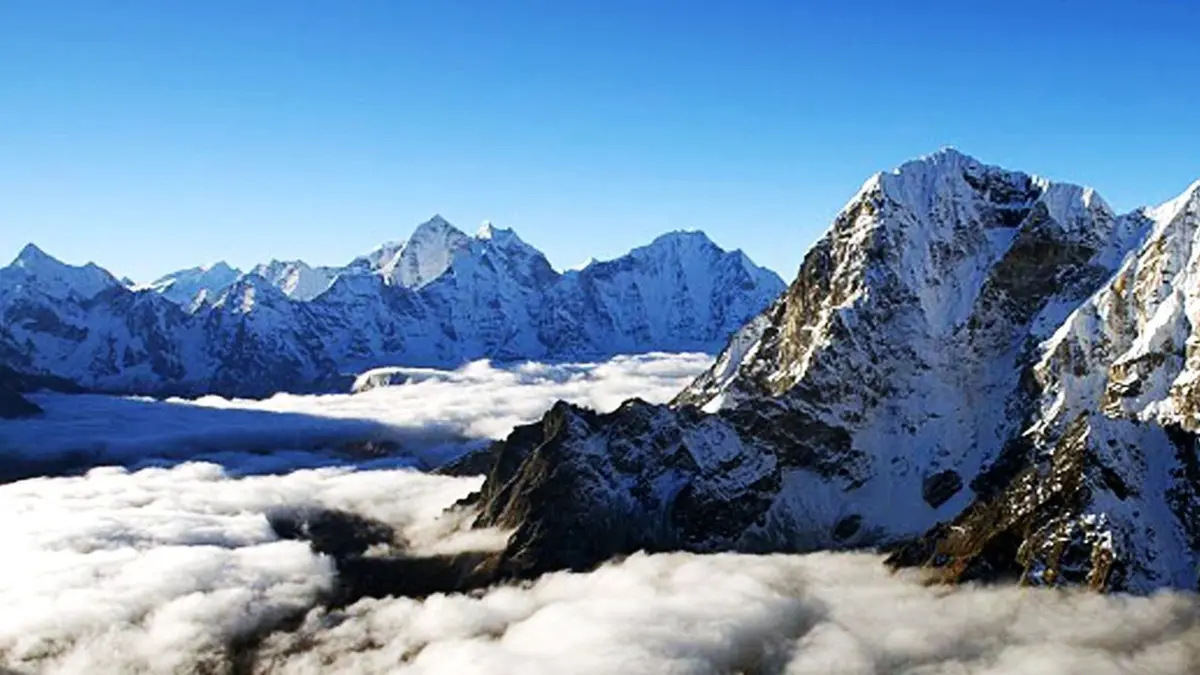
In fact, once you ascend above Namche Bazaar, the view of Mount Everest will become quite regular along the way. The landscapes also change every day as the elevation rises.

Dingboche village ahead, you will come out of the treeline and walk through the lateral moraine of the Khumbu Glacier to reach Gorak Shep via Lobuche village. Gorak Shep is the middle ground between EBC and Kala Patthar.

From Gorak Shep, you will ascend to both places and return to Lobuche village to begin the climbing phase.

Lobuche Peak Climbing route

Lobuche Peak is not a technically advanced mountain, so it is a great choice for someone getting into peak climbing. Although the technical challenges are low, the physical and mental demands are very high.

We will climb Lobuche East Peak. From the Lobuche village, we will climb following the southeast ridge. It is a standard route for Lobuche East Peak.

The South and Southeast Ridges form a distinctive rock triangle that extends from the panel to the Khumbu Glacier. The ridges are easily identifiable as they are marked with stone memorials.

There will be camping arrangements at both base camp and high camp. On the way to the summit, you will traverse several terrains and encounter a 2-hour slog along a well-outlined trail.

At 5,030 meters, you will come across a beautiful hidden lake. Then climb a series of ice/snow slabs that give way to the Lobuche East Peak High Camp.

Our Sherpa team will secure the climbing route with fixed ropes. Once the slab ends, you will face a 50-degree snow wall that takes you onto the ridge.

For the final stretch, you will navigate an exposed, sharp snow ridge that leads to the first summit. You may have to rappel down a short notch before making the final sharp ascent to the true Lobuche East Peak summit.

Is Lobuche Peak Climbing with Everest Base Camp trek 16 days suitable for you?

The Lobuche Peak Climbing is best for experienced trekkers who are ready to transition into peak climbing. Although physical and mental demands increase drastically during peak climbing compared to trekking, you still get to have a slow introduction to technical climbing.

If you are new to climbing, the Lobuche Peak Climbing is a great option. Likewise, this peak is also great for acclimatizing or practicing your climbing skills before a 7,000m or 8,000m expedition.

Lobuche Peak Climbing difficulty

Lobuche Peak is a trekking peak in Nepal, so it is considered a beginner-friendly mountain with little to no technical challenges. However, the physical and mental demands are very high.

The Lobuche Peak Climbing route includes navigating a glacier, a steep headwall, and high altitude. You may face weather challenges such as strong winds, snowstorms, whiteouts, etc.

Likewise, extreme cold and sun exposure are other factors that make climbing Lobuche Peak strenuous. According to the Alpine grading and French systems, Lobuche East Peak's difficulty is graded PD+.

What does PD+ mean?

➤ Straightforward route with moderate technical sections

➤ Climbing techniques: Self-arrest, rope work, ice & rock scrambling, and basic knowledge of ice axes, crampons, ascenders, and descenders

➤ Some exposures, but manageable with proper climbing skills

➤ Glacier travel with a few crevasses

➤ Steep headwall crossing

➤ Summit slopes up to 45-50 degrees

Note that altitude is not graded into PD+. As Lobuche East Peak takes you above 6,000 meters, you will experience low oxygen levels. You must be able to perform in high altitude conditions.

Fitness and training for Lobuche Peak Climbing

To climb Lobuche Peak or any peak in the Himalayas, you need strong cardiovascular fitness. Climbing at reduced oxygen levels demands sustained endurance, stamina, and strength to push yourself.

Endurance/stamina training:

  • Back-to-back long cardiovascular exercise days without performance degradation
  • 6-8 hour hike with 1,200+ meter elevation gain weekly if possible
  • Heart rate zone 2 training for 4-6 hours continuously
  • Regular long walks with an 8-12 kg weighted pack
  • Consistent training volume: 6-10 hours weekly for 4-6 months

Strength training:

You not only climb Lobuche Peak on this trip but also cover more than 130 km of trekking distance. For that, you need to be strong. Strength training is also an important part of training for Lobuche Peak.

  • Focus on leg strength
  • Core stability
  • Grip strength
  • Hip mobility
  • Eccentric leg strength (downhill stability to prevent knee injury)

Climbing skills:

We welcome complete beginners for Lobuche Peak Climbing. It means you do not need any climbing skills.

However, we recommend interested climbers watch a few beginner climbing videos online and get acquainted with basic climbing gear and techniques.

So when we explain how to use the Climbing Gear or teach you climbing skills, it will be easier for you to understand.

Watch: crampons course, ice axe arrest, fixed rope systems, glacier travel, knot tying, and anchor assessment.

Mental preparation:

For a successful summit, you have to be mentally determined. Limited facilities, constant change in weather, cold climate, low oxygen level, and long walking add psychological pressure on you. You have to be resilient and determined.

Lobuche Peak Climbing with Everest Base Camp trek cost and booking with Adventure Magic Treks

We have the best Lobuche Peak Climbing with Everest Base Camp trek cost in the market. This 16 days itinerary is a well-tested one and has a high summit success rate.

However, you can customize the Lobuche Peak Climbing with Everest Base Camp trek itinerary as per your fitness and previous high-altitude/climbing experience.

We, Adventure Magic Treks, are a well-established Nepali trekking and climbing company with many years of expertise, an incredible Sherpa team, and top-notch service.

By climbing with us, you do not have to worry about anything. From the Lobuche Peak Climbing permit to transportation, camping support, trained Sherpa crew, and other logistics, we will handle everything.

You can easily book this trip through our website or contact us if you have any questions or need assistance.

Lobuche Peak Climbing with Everest Base Camp Trek Detailed Itinerary

1Day

Kathmandu arrival and transfer you to the hotel

The Adventure Magic team will welcome you at the Kathmandu Airport on your arrival day. We will transfer you to the hotel in a private vehicle. You can rest and later meet us for the trip briefing.

After that, do last-minute shopping and pack your duffel bags. You can rent climbing gear at a very affordable price. If you have any questions, feel free to ask us anytime.

Max Altitude: 1,324 m/4,344 ft
Meals: Null
Accommodation: Hotel
2Day

Early morning flight from Kathmandu to Lukla airport and trek to Phakding (2,610 m/8,563 ft)

Today, you will fly to Lukla. From Kathmandu, it will be a short, scenic flight. Unlike most trekking companies out there, our first choice is to book the Lukla flight from Kathmandu Airport even in the spring and autumn seasons. For that, you need to book the trip early, so we can get tickets on time.

Alternatively, we will take the Lukla flight from Ramechhap Airport. It takes 4-5 hours to reach Ramechhap Airport from Kathmandu. So, we’ll leave the hotel around 12:00 AM.

Upon landing in Lukla, we will get our luggage and begin descending to Phakding village with our guide and porters. The trail goes through bustling Lukla village and follows the Dudh Koshi River.

You will cross this river multiple times via a suspension bridge on the way. Likewise, pass by small villages and walk through lush rhododendron forests.

If you want to skip the uncertainty of the standard Lukla flight and drive to Ramechhap Airport, you can upgrade to a helicopter flight. We offer a guaranteed window seat and 100% departure. And most importantly, helicopter flights are operated from Kathmandu Airport throughout the year.

Max Altitude: 2,846 m/9,337 ft
Meals: Breakfast, lunch & dinner
Duration: 35 minutes flight & 3 hours trek
Distance: 6.2 km/3.8 miles
Accommodation: Lodge
3Day

Trek from Phakding to Namche Bazaar

The trail from Phakding to Namche Bazaar goes through rhododendron forests and passes by small Sherpa villages on the way. You will cross numerous suspension bridges, including the long Tenzing Hillary Suspension Bridge.

In Monjo village, the Lobuche Peak Climbing permits are registered. We’ll then enter the Sagarmatha National Park. The trail gradually ascends through lush forests to Top Danda.

If the weather is clear, you will witness the first glimpse of Mount Everest from Top Danda. The final ascent to Namche Bazaar is steep, so you have to ascend slowly.

Max Altitude: 3,440 m/11,290 ft
Meals: Breakfast, lunch & dinner
Duration: 6-7 hours
Distance: 7.4 km/4.6 miles
Accommodation: Lodge
4Day

Acclimatization in Namche Bazaar: hike to Hotel Everest View

Acclimatization days are crucial to adjust to high altitude and avoid altitude sickness. Early in the morning, you will go on a side hike to Hotel Everest View. The hike offers breathtaking views of Mt. Thamserku and Khumbila.

From Hotel Everest View, you will witness a distant but captivating view of two 8,000m mountains, Mt. Everest and Mt. Lhotse. Along with that, you will also see Ama Dablam and Nuptse views. After enjoying the view, return to Namche Bazaar to spend the night.

On the way, explore the Everest Photo Gallery and Sherpa Culture Museum. Get some rest and in the evening explore the bustling shops, pubs, and cafes around this beautiful Sherpa town.

Max Altitude: 3,962 m/13,000 ft
Meals: Breakfast, lunch & dinner
Duration: 4-5 hours
Accommodation: Lodge
5Day

Trek from Namche Bazaar to Tengboche village

Continuing the trek from Namche Bazaar, follow a relatively flat trail to Kyangjuma. From here, you will sharply descend to Phunki Tenga. The trail then ascends through dense rhododendron and pine forests to Tengboche village.

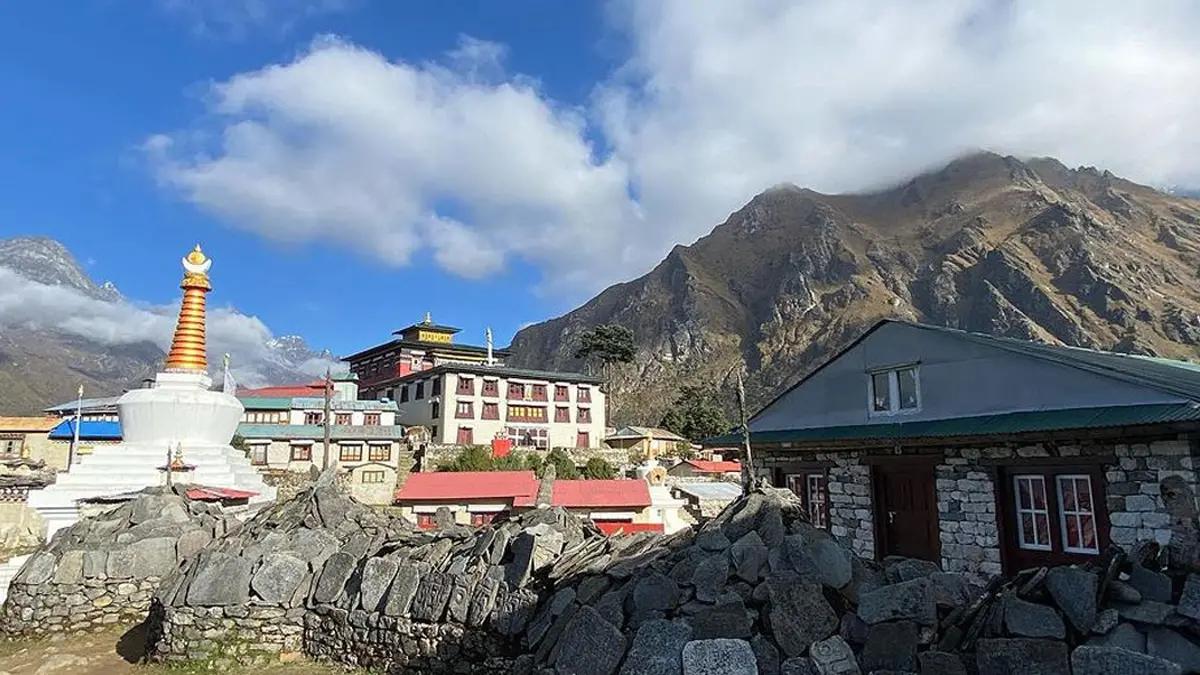
In Tengboche, you will get to explore the biggest monastery of the region and witness jaw-dropping views of Mt. Everest and Mt. Ama Dablam.

Max Altitude: 3,860 m/12,660 ft
Meals: Breakfast, lunch & dinner
Duration: 5-6 hours
Distance: 9.2 km/5.7 miles
Accommodation: Lodge
6Day

Trek from Tengboche to Dingboche

From Tengboche, the trail descends through lush forests to the Imja Khola Valley Floor. You will pass by Deboche village. Cross the river and ascend to Pangboche village.

Explore the ancient Pangboche monastery and ascend through small settlements such as Orsho and Shomare to Dingboche village, the Summer Valley of the Khumbu region.

Max Altitude: 4,410 m/14,470 ft
Meals: Breakfast, lunch & dinner
Duration: 6 hours
Distance: 12 km/7.45 miles
Accommodation: Lodge
7Day

Acclimatization day- hike to Nangkartshang Peak or Chhukung Valley

Like in Namche Bazaar, we take a second acclimatization break in Dingboche village. We have two side hike options from here, Nangkartshang Peak or Chhukung Valley.

Both hikes are adventurous and offer breathtaking mountain views. You will see mountains such as Makalu, Cho Oyu, Island Peak, Ama Dablam, Cholatse, etc.

After the hike, spend the remaining day in Dingboche village seeing the daily lives of the locals and resting.

Max Altitude: 5,083m/16,676 ft
Meals: Breakfast, lunch & dinner
Duration: 4-5 hours
Accommodation: Lodge
8Day

Trek from Dingboche to Lobuche via Dughla Pass (4,830 m/15,846 ft)

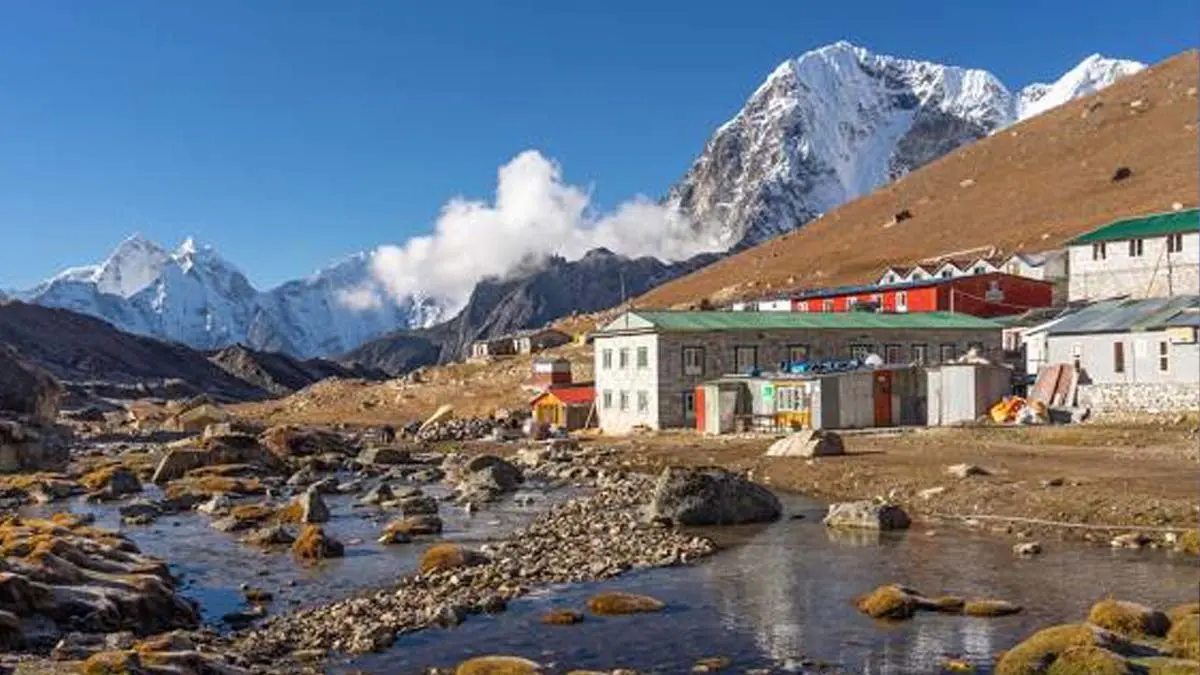
The trail from Dingboche continues to Lobuche village. You will leave the treeline behind and pass by junipers on the way. The landscape turns rocky and barren with lofty mountains right in front of you. The trail ascends to Dughla Pass and passes by the memorial chortens made in memory of dead climbers on Everest.

Max Altitude: 4,940 m/16,210 ft
Meals: Breakfast, lunch & dinner
Duration: 6-7 hours
Distance: 8.5 km/5.2 miles
Accommodation: Lodge
9Day

Trek from Lobuche to Everest Base Camp via Gorak Shep (5,164 m/16,942 ft) and back to Gorak Shep for a night's stay

From Lobuche village, you will walk through the lateral moraine of the Khumbu Glacier and navigate rocky tracks to Gorak Shep. It is the last settlement before Everest Base Camp.

We’ll rest at Gorak Shep for a bit and continue hiking to EBC. Explore the base camp of the tallest mountain in the world and enjoy a close-up view of the infamous Khumbu Icefall.

Then retrace the trail back to Gorak Shep to spend the night.

Max Altitude: 5,364 m/17,598 ft
Meals: Breakfast, lunch & dinner
Duration: 8 hours
Distance: 15 km/9.32 miles
Accommodation: Lodge
10Day

Hike to Kala Patthar early in the morning and trek down to Lobuche village (4,940 m/16,210 ft)

Start the day before the sunrise and hike to Kala Patthar. The hike will be great for acclimatization, and you will also get to witness a gorgeous sunrise along with a jaw-dropping view of Mt. Everest and many other mountains. After the hike, you will retrace the trail back to Lobuche village.

Max Altitude: 5,545 m/18,129 ft
Meals: Breakfast, lunch & dinner
Duration: 6 hours
Distance: 7.7 km/4.7 miles
Accommodation: Lodge
11Day

Climb from Lobuche village to Lobuche East Peak High Camp via Lobuche East Base Camp (5,010 m/16,437 ft)

Today, you will climb from Lobuche village to Lobuche East Peak Base Camp. The trail branches off from the busy EBC trail and goes through a quiet moraine to the base camp.

Then, you will climb through the Lobuche Glacier and rugged rocky moraine to reach Lobuche East Peak High Camp. Upon reaching the high camp, our team will set up the tents and prepare meals.

Max Altitude: 5,400 m/17,716 ft
Meals: Breakfast, lunch & dinner
Duration: 6-7 hours
Accommodation: Tent
12Day

Climb Lobuche East summit and return to Pheriche (4,371 m/14,340 ft) via base camp and Lobuche village

On this day, you will be pushing towards the summit of Lobuche East Peak. You will leave the high camp at around 1:00 to 2:00 AM. The route to the summit traverses a rocky mountain and snow slopes.

You will use crampons, fixed ropes, and other climbing gear. In around one hour of climbing, you will reach the base of a steep headwall. It will be a 45-60 degree incline.

After the headwall, navigate an exposed, sharp snow ridge that leads to the first summit. You may have to rappel down a short notch before making the final sharp ascent to the true Lobuche East Peak summit.

Enjoy an incredible mountain panorama from the summit. After some time, descend back to high camp and pack up your stuff. Then, follow the same trail back to Lobuche village and further walk down to Pheriche.

Max Altitude: 6,119 m/20,075 ft
Meals: Breakfast, lunch & dinner
Duration: 9-10 hours
Accommodation: Lodge
13Day

Trek from Pheriche to Namche Bazaar

From Pheriche, the trail descends to a river and continues to Pangboche village. You will then ascend through the pine forest to Tengoche village and descend to Namche Bazaar via Phunki Tenga.

Max Altitude: 3,440 m/11,286 ft
Meals: Breakfast, lunch & dinner
Duration: 7 hours
Distance: 19.5 km/12 miles
Accommodation: Lodge
14Day

Trek from Namche Bazaar to Lukla

Leaving Namche, you will follow the same trail back to Lukla. Steeply descend through lush forests and pass by small villages on the way. Likewise, cross numerous suspension bridges. From Phakding, it is a gentle uphill climb to Lukla.

Max Altitude: 2,846 m/9,337 ft
Meals: Breakfast, lunch & dinner
Duration: 7-8 hours
Distance: 13.5 km/8.3 miles
Accommodation: Lodge
15Day

Morning flight back to Kathmandu from Lukla airport & hotel drop

Take a morning flight back to Lukla. Our team will pick you up from the airport and drop you off at the hotel. You can spend the remaining day resting and exploring the bustling streets of Thamel.

Max Altitude: 1,324 m/4,344 ft
Meals: Breakfast only
Duration: 35 minutes flight
Accommodation: Hotel
16Day

Final departure

On your departure, you will fly out of Kathmandu to your home. Our team will transfer you to the international airport in a private vehicle.

Meals: Breakfast only
Still Confused? Let Us Guide You
No worries — we’re here to help. Whether you have questions or just need a bit more clarity, feel free to reach out. Our team is ready to guide you every step of the way.

Lobuche Peak Climbing with Everest Base Camp Trek Cost

What’s Included

  • Airport arrival and departure by private vehicle
  • 3-star accommodation in Kathmandu on BB plan
  • Kathmandu to Lukla and Lukla to Kathmandu standard domestic flights
  • Standard mountain lodges during the trek
  • Three meals (breakfast, lunch, and dinner) a day during the trekking
  • Camping and full board service during climbing
  • Elite professional climbing guide (English speaking) and ample Sherpa support
  • Lobuche Peak climbing permits
  • Down jacket, a four-season sleeping bag
  • Exclusive medical kit bag
  • Satellite phone
  • Walkie talkies
  • All government and local taxes
  • The company's charge

What’s Excluded

  • International flights to/from Kathmandu
  • Trekking/climbing gear and essentials
  • Lunch and dinner in Kathmandu
  • Travel and rescue insurance
  • Personal expenses 
  • Tips for drivers, guides, and porters
  • Souvenir shopping
  • Excess baggage charges
  • All necessary monument entry fees for sightseeing
  • Departure taxes
  • Any expense not mentioned in Cost Include section

Dates and Availability

Select Departure Date

We have both fixed departures and private departures available for Lobuche Peak Climbing with Everest Base Camp trek. Choose the one that best fits your requirements. 

You can also customize the Lobuche Peak Climbing with Everest Base Camp trek itinerary. For any further assistance, feel free to contact us

Once you book the trek, you will be bound by our Terms & Conditions.

Add-ons

➤ 5-star Hotel in Kathmandu and Pokhara: Upgrade to 5-star hotels in Kathmandu and Pokhara.

➤ Helicopter flight from Kathmandu to Lukla: Upgrade to a helicopter flight to give a grand start to your trek.

➤ Helicopter flight from Lukla to Kathmandu: Enjoy a comfortable, scenic helicopter flight back to Kathmandu.

➤ Guided sightseeing tour in Kathmandu: Great to learn Nepalese culture, tradition, and history while exploring ancient historical sites.

Still Confuse? Consult an Expert

Equipment Lists

Download Equipment Lists

Essential Information

Lobuche Peak Climbing permits

To climb Lobuche Peak, you will need the following permits:

  • Nepal Mountaineering Association (NMA) Trekking Peak Permit for Lobuche Peak
  • Sagarmatha National Park Permit
  • Khumbu Pasang Lhamu Rural Municipality Permit

In addition, there will also be waste deposit fees. Our Lobuche Peak Climbing is inclusive of all permits. So, you do not have to pay extra money.

To obtain the Lobuche Peak Climbing permits, we will need the following documents:

  • Passport of the climber (with at least 6 months' validity from the day they enter Nepal)
  • Passport-sized photos
  • Medical clearance
  • Previous trekking records
  • Nepal travel visa copy (might be needed)

Best time to climb Lobuche Peak

The best time to climb Lobuche Peak is April, May, September, October, and November. Climbing conditions are great in the Himalayas in these months.

You will get relatively stable weather, multiple summit windows, moderate climate in the lower valleys, low risk of avalanches and snowstorms, and outstanding mountain vistas.

As the difficulty level varies substantially from month to month, climbers should wisely choose the month to climb based on their fitness, experience, health, and summit success rate.

High altitude and altitude sickness during Lobuche Peak Climbing

One of the biggest factors that makes climbing Lobuche Peak or any peak in Nepal very demanding is the high altitude. Above 6,000 meters, the atmospheric pressure drops roughly 50 percent of sea level. So, you will experience reduced oxygen.

Low oxygen means you will get tired quickly and every step will become heavy. In short, your performance will be less than half compared to low elevation. Along with physical strain, physiological effects are also high above 6,000 meters.

You will experience increased heart rate, elevated breathing, a decline in cognitive function, significantly degraded sleep quality, and often suppressed appetite.

All these make climbing substantially tougher than you may have imagined. And there is also a risk of altitude sickness if you do not acclimatize.

Acute Mountain Sickness (AMS) is the initial stage and can be handled with medicine, resting, and descending. However, HACE and HAPE are the progressive forms of altitude sickness and require immediate helicopter evacuation and medical assistance.

➤ Symptoms of altitude sickness: Headache, vomiting, nausea, dizziness, loss of appetite, fatigue, insomnia, and difficulty breathing.

➤ Symptoms of progressive form of altitude sickness (requires immediate descent and medical assistance): Severe headache, confusion, ataxia, altered consciousness, cough, chest tightness, etc.

Tips to avoid altitude sickness during Lobuche Peak Climbing:

  • Follow our acclimatization plan and do not skip acclimatization hikes. Acclimatization hikes are crucial to adjust to high elevation.
  • Ascend slowly. Maintain a steady pace.
  • Keep yourself hydrated. Drink 2 to 3 liters of water daily. Avoid high intake of caffeine and do not consume alcohol or smoke.
  • Have ample food and get enough sleep every day to be in your best condition.
  • Listen to your body and address any discomfort on time. Do not take any medicine without your guide's knowledge.

Accommodation during Lobuche Peak Climbing

While trekking, you will stay in a standard lodge. Rooms will be twin shared. At low elevation, you may get a private bathroom, but in most lodges, the washrooms are shared between the trekkers.

We can book a single room for you at an additional charge. If you want better service, room, and private washroom in all villages during trekking, upgrade to luxury lodges.

During climbing, you will stay in Alpine tents. These tents are made for unpredictable Himalayan weather and extreme cold. We provide full tent, fuel, and food service during climbing. So, you do not have to worry about anything.

Meals and drinking water

Melas in lodges are simple but tasty. Options are excellent in Lukla and Namche Bazaar. You can get pizza, burgers, and many other Western dishes.

The standard menu includes dal bhat, fried rice, Sherpa stew, porridge, momo, chowmein, Tibetan bread, thukpa, thenduk, paratha, soups, meat dishes, eggs, toast, oats, etc.

Tea, coffee, and soft drinks are also available in all places. Local alcohol and wines are sold in most places, too, but we do not recommend having alcohol when ascending.

During trekking, you can get boiled drinking water in all lodges. It is safe to drink. For backup carry, water purification tablets. While climbing, we will carry ample drinking water up the mountain.

Travel insurance for Lobuche Peak Climbing

Travel insurance is mandatory for Lobuche Peak Climbing. It must cover high altitude mountain climbing in the Himalayas, emergency helicopter evacuation, medical bills, and altitude sickness. You can also include trip cancellation, flight delays, and other coverages in your travel insurance.

Guide and porter tips

We provide experienced guides and Sherpas for Lobuche Peak Climbing. It will drastically reduce physical and mental strain on you.

Our Sherpa team fixes ropes, establishes camps, helps you navigate the route, and assists with climbing equipment. It leads to a higher summit success rate and an excellent overall peak climbing experience.

Our Sherpa-to-climber ratio for Lobuche Peak Climbing is 1:1. So, you will have full attention from our Sherpa. We have already included our support team salaries in our Lobuche Peak Climbing package.

However, climbers have to take care of the tips. There is no fixed tipping amount for peak climbing. We only recommend tipping generously, given the high challenge and intensive assistance requirements during Lobuche Peak Climbing.

Communication

WiFi is available in lodges along the trail up to Lobuhche village. Likewise, a mobile network is also available in many places. The network can be slow depending on the weather.

During climbing, we carry a satellite phone for emergency communication and walkie-talkies to stay connected with our support team at lower camp.

Lobuche Peak Climbing safety and evacuation

There is risk in climbing every mountain in the Himalayas, whether it is 6,000m, 7,000m, or 8,000m. There are risks related to altitude and hazards such as avalanches, crevasses, frostbite, etc.

The more aware you are of all the risks, the better you can minimize them. Proper preparation, conscious decision, and systematic safety protocols are the ways to mitigate risks.

It does not eliminate the risks entirely. However, it reduces the overall probability of accidents and unseen incidents. Therefore, we plan every aspect of Lobuche Peak Climbing meticulously.

Our risk reduction strategies:

  • Gradual ascending and well-tested acclimatization plan.
  • Highly experienced guides and adequate Sherpa support.
  • We double-check all our climbing gear and carry backups
  • Monitoring weather forecasts actively.
  • Constant communication between the climbing team.
  • Pre-climbing training and briefing by the team leader.
  • Comprehensive first aid kit.
  • Immediate emergency helicopter evacuation if needed.

Nepal Travel visa

You can acquire a travel visa upon arriving at Tribhuvan International Airport or any land border. It is called an on-arrival visa.

Travelers from most countries can get the on-arrival travel visa except Ghana, Nigeria, Cameroon, Swaziland, Zimbabwe, Liberia, Somalia, Iraq, Ethiopia, Afghanistan, Palestine, Syria, Iran, and refugees with travel documents.

Alternatively, travelers can also acquire a visa from the Nepalese Embassy or Consulate Office in their country.

Travel visa fee is not included in our Lobuche Peak Climbing package. Travelers have to get it by themselves. The visa fee is USD 30 for 15 days, USD 50 for 30 days, and USD 125 for 90 days.

You can learn more in detail about the travel visa, visa extension, gratis visa, etc, on the official website of the Nepal Tourism Board.

Lobuche Peak Climbing with Everest Base Camp Trek FAQs

Q1.

Where is Lobuche Peak located?

Lobuche Peak is located in the eastern Himalayan range in Nepal, inside the Sagarmatha National Park. The peak falls on the way to Everest Base Camp. The Lobuche village is situated at the foot of this peak.

Q2.

How high is Lobuche Peak?

The Lobuche Peak has two summits, Lobuche East (6,119 m) and Lobuche West (6,145 m).

Q3.

What is the difference between Lobuche East and Lobuche West?

Lobuche East and Lobuche West are two different summits of the same mountain range. Both summits are popular among mountaineers, and both offer different climbing experiences.

On this Lobuche Peak Climbing trip, you will climb the Lobuche East Peak, which is a trekking peak and recommended for beginner climbers.

However, Lobuche West involves technical climbing, which is more challenging and requires an expedition-style trip.

Q4.

Why is Lobuche Peak one of the most popular climbing peaks in Nepal?

Lobuche Peak offers a perfect combination of high-altitude climbing, adventure, and stunning mountain views without technical climbing.

It makes this peak approachable for first-time climbers or those interested in climbing a peak without going on a two-month expedition and breaking their bank.

Q5.

How do you reach Lobuche Peak Base Camp?

You will fly from Kathmandu to Lukla and trek to Lobuche Peak Base Camp. Our itinerary includes hiking to Everest Base Camp and Kala Patthar, too, which is great for acclimatization.

However, if you are an experienced trekker or climber, you may climb Lobuche Peak without hiking to EBC.

Q6.

Do you need to trek through Everest Base Camp before climbing Lobuche Peak?

You do not necessarily need to trek through Everest Base Camp before climbing Lobuche Peak. However, the EBC hike is great for acclimatization and adds more adventure to your journey.

Q7.

Is Lobuche Peak a trekking peak or a technical climbing peak?

The Lobuche Peak is a trekking peak in Nepal. But it is not as simple as trekking to Everest Base Camp. The technical challenges are almost non-existent on Lobuche Peak, but it involves snow and ice climbing.

You will use crampons, ice axes, ropes, and other climbing gear and techniques. Likewise, the exposure to wind, cold, and sun is also similar to technical peak climbing.

Therefore, climbers need proper physical training and support from Nepalese Sherpa climbers to safely climb Lobuche Peak.

Q8.

How long does it take to climb Lobuche Peak?

From Lobuche village, you will ascend to Lobuche Peak East High Camp via the base camp and push to the summit the next day at around 1:00 AM. In short, you will climb Lobuche East Peak from its base camp and return in one day.

Q9.

How difficult is Lobuche Peak Climbing?

Climbing Lobuche Peak is physically and mentally very demanding. High altitude, long summit push, steep ice and snow sections, and exposure to strong wind, extreme cold, and intense sun rays push you to your limits.

Q10.

Is Lobuche Peak harder than Island Peak?

Lobuche Peak and Island Peak are both popular trekking peaks and considered beginner-friendly. However, Lobuche Peak is considered slightly more technically challenging and physically demanding because of steep snow & ice slopes, mixed rock terrain, and exposed ridgelines.

Q11.

Can a first-time climber climb Lobuche Peak?

Yes, a first-time climber can climb Lobuche Peak, but it requires serious planning & preparation and extensive training. If you are completely new to the Himalayas, we recommend doing at least one circuit trek in Nepal before Lobuche Peak.

Q12.

What climbing skills are required for Lobuche Peak?

For the Lobuche Peak Climbing, you will need the following climbing skills:

  • Basic to intermediate mountaineering knowledge
  • Climbers should know the basics about climbing harnesses, carabiners, ascenders, descenders, crampons, ice axes, etc. It is fine if you do not have on-hand experience, but you should at least know about these climbing gears.
  • Basic snow and ice walking techniques using fixed ropes.
  • Glacier travel, rope safety, and self-arrest techniques.
Q13.

Is Lobuche Peak harder than Mera Peak?

Again, Lobuche Peak and Mera Peak are both trekking peaks. Mera Peak is the highest trekking peak and is physically more demanding than Lobuche Peak. However, Lobuche Peak has slightly more technical difficulties because of the steep summit section and exposed ridgelines.

Q14.

What is the success rate of Lobuche Peak Climbing?

The Lobuche Peak Climbing success rate is quite high if you are well-prepared, acclimatized, and have a reliable climbing crew. Similarly, weather also plays a big role in the summit. Based on our several years of expertise, the Lobuche Peak Climbing success rate is 85% to 90%.

Q15.

What is the best time to climb Lobuche Peak?

The best time to climb Lobuche Peak is from March to May and from September to November. These months have stable weather, so you will get several summit windows.

Likewise, daylight hours are longer, and mountain views are also crystal clear. The risk of avalanches and snowstorms is also low in these months. So, you will have safe climbing conditions.

Q16.

How much does Lobuche Peak Climbing cost?

The Lobuche Peak Climbing costs between USD 2,250 and USD 2,650 per person for a standard package with the EBC hike. The price may differ depending on your itinerary, services in the pack, and group size.

Q17.

How much money should I carry for personal expenses during the Lobuche Peak Climbing?

During trekking, you will need some money for services such as WiFi, hot showers, and charging. These expenses are not covered in our Lobuche Peak Climbing cost. We recommend climbers have USD 100 to USD 150 for personal trail expenses.

Q18.

Where do climbers stay during Lobuche Peak Climbing?

At Lobuche Peak East High Camp, climbers stay in alpine tents that are made for extreme high-altitude conditions. We provide tents, food, fuel, and necessary support.

Q19.

What documents are required for Lobuche Peak Climbing?

To do the Lobuche Peak Climbing, you will need the following documents:

  • A passport with at least six months of validity from the day you enter Nepal
  • Passport-size photo
  • Nepal travel visa
  • Travel insurance documents covering helicopter evacuation and medical bills
  • Lobuche Peak Climbing permits (we will get them for you)
Q20.

How to choose the best Lobuche Peak climbing company?

One of the main decisions you will make for the Lobuche Peak Climbing is choosing your climbing agency. First of all, we recommend directly climbing with a local Nepali company for the best price and service.

Second, while picking among many climbing agencies, look for their years of expertise, team, knowledge about the mountains, service level, previous climbers' reviews, emergency plan, etc.

Price From
US$2000
US$2100
5% Off
Group Discount Price +
  • No. of travelerPrice per person
  • 1 paxUS$2100
  • 2 - 5 paxUS$1900
  • 6 - 10 paxUS$1800