Packing for the Everest Base Camp trek can get a bit overwhelming. It is not a complicated process, but you need to pack a lot of small things and also prepare for various weather conditions, which can be a bit confusing. And do not forget that you have to pack within a certain weight limit as well.
We have prepared this blog to make packing for the Everest Base Camp trek easier for you. You can find the list of all the essential things required for the EBC trek in this blog, along with optional but useful items that will make the journey hassle-free for you.
We believe packing is one of the most crucial aspects of the Everest Base Camp trek. The better you are packed, the better your journey will be. That's why we recommend taking packing seriously.
You do not want to be overpacked or miss out on anything, which may cost you both physically and financially. Though there is no specific rule for packing for the Everest Base Camp trek, there are a few things that must be in every trekker's backpack.
We, Adventure Magic Treks, have been organizing the EBC trek for numerous years for trekkers from around the world. Depending on our personal experience and expertise, we have shared things in this blog that trekkers usually miss out on in their Everest Base Camp trek kit.
These items are not usually on your packing list for Everest Base Camp trek, but make a huge difference to the overall journey. So, you can look forward to that. Additionally, we have also shared some insider tips that will make the Everest Base Camp trek packing easy for you.

Everest Base Camp trek packing list
Below, we have shared an essential gear list for the Everest Base Camp trek. Anyone who is planning to do the Everest Base Camp trek must get this gear to ensure their safety and comfort.
Essentials
Let's start with the trekking gear that you need for the EBC trek.
Duffel bag:
You need a 70-90L duffel bag for the Everest Base Camp trek. Duffel bags are used to pack all your clothes and non-essentials items for the trail. So, anything that you may not need while walking is packed in the duffel bag.
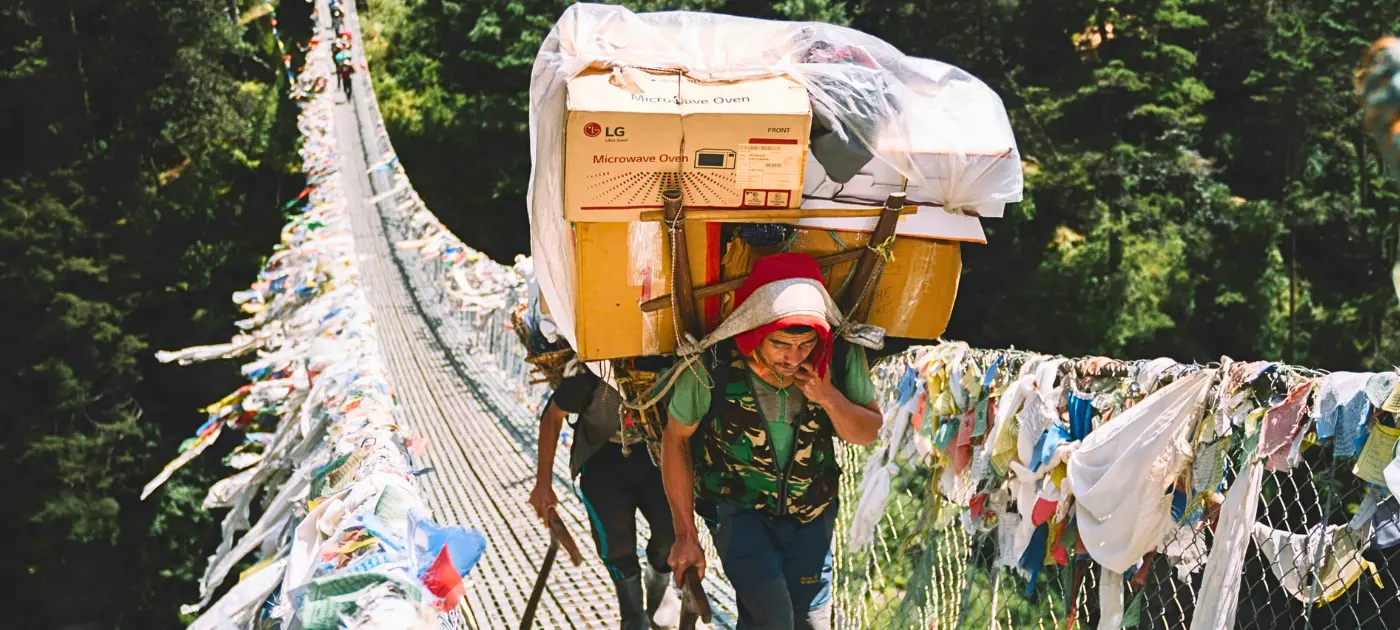
Porter carries duffel bags. They are usually ahead of the group. Unless there is an emergency, we do not open the duffel bag on the way. Adventure Magic Treks provides duffel bags to trekkers to use during the trek as a complimentary service.
Daypack:
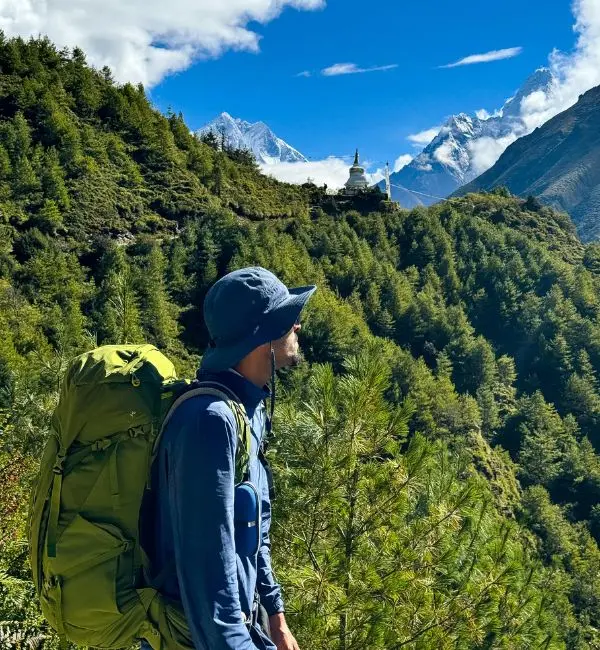
Trekkers need a 30-40L daypack with a rain cover for the Everest Base Camp trek. The daypack is carried by the trekkers themselves. It is used to pack essential things for the trail and documents.
You will pack your documents, cash, water bottle, personal first-aid kit, snacks, camera, chargers, SPF, lip balm, tissues, and other essential things for the trail in a daypack.
The daypack stays with you. So, you can pack all the small things in it.
Trekking poles:
Trekking poles are another non-negotiable for the EBC trek. Trekking poles make hiking easy. You can carry one or two trekking poles as per your wish.
Trekking poles make ascending and descending safe. They help you maintain a balance of rugged and steep terrain. And also remove pressure from your legs and body.
Sleeping bag:
A sleeping bag is also a must for the Everest Base Camp trek. This trek goes from warm sunny trails to fierce icy winds in just a couple of days of hiking. Even though the daytime is warm, nights and mornings can get quite cold even in summer.
So, trekkers need a high-quality sleeping bag to keep themselves warm and cozy at night. Lodges provide blankets to trekkers, but they may not be enough to get through the night.
Trekking boots:
Trekking boots are another essential thing for the Everest Base Camp trek. Do not compromise on trekking boots. You need nice, sturdy trekking boots that are well-fitted to you and provide ankle support.
The Everest Base Camp terrain is not straightforward and flat. You walk on mountainous terrain that is rocky, steep, and uneven. A good trekking boots will make hiking comfortable and safe.
Accessories
Below, we have shared some important items that you will need during the trek. These things can be overlooked, but are very important for you.
UV sunglasses:
The UV rays are quite high at higher altitudes. During the Everest Base Camp trek, you will go 5,000 meters above sea level. So, imagine the intensity of the sun you will be exposed to.
Your normal sunglasses are not that effective during the Everest Base Camp trek. You need special sunglasses that are made for high altitude to protect your eyes. Snow glasses are also recommended.
High SPF cream:
As we are already talking about UV rays, we also want to inform you that sunburn is common during the EBC trek. Again, high UV rays mean your skin will get burned.
To avoid it, you need to apply high SPF sunscreens daily on your face and any exposed body parts. Apply sunscreen multiple times a day during the trek.
Water bottles:
We recommend carrying two water bottles during the EBC trek. Get one that is 1-2L and is leakproof. Likewise, carry another 500 ml flask that can keep water hot for at least 8 hours.
Drinking boiled water during the trek is common. It is cost-effective and easily accessible through the EBC trail. A flask is great to carry hot tea or soup for the trail, or just hot water.
Gaiter:
A gaiter is not mandatory but recommended. It protects your legs from snow, dirt, water, and wind. It also protects from vegetation and insect bites.
If you are doing the Everest Base Camp trek in winter or monsoon, a gaiter is mandatory.
Headlamps with batteries:
A headlamp is an optional thing that you can carry during the EBC trek. It is great for acclimatization hiking days. Alternatively, you can carry a pocket-friendly torch.
Buff:
Buff, also known as a neck gaiter, is usually not recommended for the Everest Base Camp trek. However, we believe it is an important item that will make trekking above Dingboche village easy for you.
Above Dingboche village, the wind is strong, and the air also has tiny sandy dust. Buff will prevent your neck from drying out and also protect you against the infamous Khumbu cough.
Clothes
While dressing during the Everest Base Camp trek, you have to wear the clothes in layers, and it is important that you layer your clothes properly.
You will experience different climates and temperatures as you ascend from Lukla to EBC. Regulating your body temperature is required as per the climate.
Base layers:
The base layer is closest to your skin. It should be breathable and comfortable. The base layer includes your undergarments, t-shirts, and pants. Make sure they are lightweight, moisture-wicking, ad fitted to your size.
Thermals and fleece:
It is your mid-layer. You wear it on top of your base layer. Thermals/fleece help regulate body temperature. You cannot skip this layer in the mountains.
Insulated down jacket:
Down jackets are a must for high elevations. It keeps you warm.
Waterproof/windproof shell (jacket and pants):
The higher you ascend, the stronger the wind becomes. Once you hike above Dingboche village, you can feel the wind getting swift. Likewise, there can be moisture in the air.
To solve both these problems, we wear a windproof/waterproof shell. It is also the final layer when you dress up for the Everest Base Camp trek.
Trekking t-shirts and trousers:
These are the base layers. Trekking t-shirts and trousers should be quick-dry, moisture-wicking, and comfortable. You can carry a couple of pairs of half and full self trekking t-shirts, and warm and thick pairs of pants.
Gloves:
You need a pair of gloves that are usable on screen. You do not have to keep opening your gloves to use your mobile phone. Likewise, get heavy outer gloves for more warmth.
Scarves and a beanie:
You have to protect your head and neck from the cold. It will make hiking at high altitude easy and also lower the risk of altitude sickness. You can pick between a scarf and a buff, but a beanie is non-negotiable. Pack two beans. Use one while trekking and one while sleeping.
Sut hat:
At a lower altitude or while trekking, you will need a sunhat to protect from the sunlight.
Socks:
You need at least two types of socks for high-altitude trekking. First, you need line socks. It is great for wearing inside trekking boots. Liner socks are thin but warm.
You will also need heavy, fluffy socks to wear in the teahouses and during trekking. Woolen socks are highly recommended.
Sleepwear:
We highly recommend separating your sleepwear from hiking clothes. You will feel more comfortable and relaxed.
It is not a common practice among trekkers, but based on our many years of experience, we have seen a significant difference in the overall trek experience.
Pack a dedicated t-shirt/long-sleeve, trousers, fleece or hoodie, and indoor socks and shoes.
Toiletries and personal hygiene
Taking a shower daily during the Everest Base Camp trek is not easy and not even recommended. So, trekkers have to pay more attention to their hygiene and cleanliness.
- Toothbrush and toothpaste
- Biodegradable soap/shampoo
- Deodorant, razor
- Wet wipes
- Hand sanitizer
- Toilet paper (carry extra)
- Quick-dry towel
- Moisturizer/body lotion (cold and dry climate will make your skin rough, so you need a good-quality moisturizer)
- Any other skincare or hygiene products that you use regularly
Food and snacks
If you have bought an Everest Base Camp trek package, you will get three meals a day in it. But you may want to munch while hiking or when you are low on energy and need something to boost your energy. So, carry snacks and bars for the trail.
- Energy bars, chocolates, trail mix, nuts
- Hydration salts/electrolyte powder
- Instant coffee/tea sachets (optional)
First-aid
Make a small first-aid kit for yourself. If you are on any medication that you need to have daily, pack them and pack a few extra doses just in case your trip extends in Kathmandu. Similarly, include the following things in your first-aid kit:
- Personal prescriptions
- Painkillers (ibuprofen/paracetamol)
- Diamox (consult doctor before use)
- Antiseptic cream, band-aids, blister pads
Miscellaneous
- Camera/GoPro with spare batteries and memory cards
- Mobile and charger
- Powerabank
- Solar charger (highly recommended)
- Universal adapter
- Journal and pen (optional)
- Cards and games (Optional)
- Small travel pillow
- A set of bed sheets and a pillow cover (optional)
- Ziplock bags (to store used clothes and other things)
- Small nail clippers, scissors, and a knife set (for backup)
Insider's tips for Everest Base Camp trek packing
- Use a water bladder. It will make drinking water very easy and accessible while on the trail.
- Make sure you have broken into your trekking boots. A new pair of boots can give you blisters, so it's not recommended.
- Keep your SPF, lip balm, and moisturizer in your daypack. Pack extra SPF.
- Separate your sleeping trousers, socks, bennie, and undies from the hiking ones.
- Pack ORS or electrolytes. They are great for an instant energy boost.
- Fill your water bottle with hot water at night and use it to warm yourself up while sleeping.
- Khumbu cough is real and can become quite irritating. So, cover your nose, mouth, and neck above Dingboche village.
- Reapply SPF every 2 hours to lower the chances of sunburns.
Winter and summer/monsoon EBC treks require a few extra seasonal things. The Everest Base Camp packing list we have shared in this blog is a base guideline. If you are trekking in winter, you will need a few winter clothes. Likewise, the summer/monsoon season requires additional rainy gear.
Rent or buy trekking gear for the Everest Base Camp trek
You will start your Everest Base Camp trek journey in Kathmandu, the capital of Nepal. This city has everything related to trekking and peak climbing in the Himalayas.
You can find both branded and non-branded trekking clothes, gear, and all essentials. And the prices are unbeatable. You can buy high-quality gear at a very reasonable cost in Kathmandu.
Not only that, but a rental option is also available for trekking gear, such as sleeping bags, trekking boots, down jackets, duffel bags, daypacks, trekking poles, etc.
If you are on a tight budget or do not want to spend lots of money on a one-time trek, you can rent trekking gear that is expensive. Similarly, trekkers who are looking for a good variety of trekking clothes and gear before they purchase will also love the range of options that are available.
Packing list for Everest Base Camp trek: checklist
Head & Hand
- Sun Cap
- Wool/Fleece Hat
- Neck Gaiter
- Lightweight Synthetic Liner Glove
- Wind Stopper Fleece Gloves
Upper Body
- Short-Sleeved Shirts/T-shirts
- Lightweight Top/Thermo Coat
- Synthetic or Fleece Jacket
- Down Insulated Jacket
Lower Body
- Underwear
- Trekking Pants
- Synthetic Insulated Pants
- Trekking Socks
Trekking Gear
- Sleeping Bag
- Sun Glasses UV Protection
- Extendable Trekking Poles
- Duffelbag
- Daypack
- Trekking boots
- Lounge sandal
- Water Bottles
- Thermos/Flask
First-Aid Kit
- Water Purification Tablets
- Baby Wipes or Wet Towels
- Band-Aids, Antiseptic Cream
- Strepsils
- Paracetamol, Aspirin, Anti-Diarrhea Capsule/Eldoper, Diamox (consult your doctor)
- Eye Drops
Toiletries
- Sunscreen (SPF 50+++)
- Lips Guard (with SPF)
- Hand Sanitizers & Handwash
- Wet Tissues
- Toothpaste
- Toothbrush
- Bath Soap
- Shampoo
- Moisturizers
- Deodrant
- Sanitary Pad
- Toilet Paper
- Laundry Soap
- Garbage Bag
Miscellaneous
- Dry Towel
- Rain Coat and Cover
- Spare Batteries
- Universal Charger
- Camera with extra battery and memory card
- Solar chargeable power bank (optional)
- Journal/Pen (optional)
- Book/Board Game (optional)
- Bars & Snacks
- Zip-Lock Bags
Travel Documents
- Valid Passport (at least 6-7 months of validity from the date you enter Nepal)
- Nepal travel Visa
- 4 PP Size Photo
- Insurance Paper (Medical & Rescue) & Contact Address
- Family/Company Contact Number & Address
- Credit Card
Final thoughts:
We hope this blog has cleared all your questions about the packing list for the Everest Base Camp trek. Packing for Everest Base Camp is not that challenging if you are well-informed and understand the trail conditions, weather, and climate in the Himalayas.
Although the EBC trek demands a lot of things, all of them are easy to find on most e-commerce sites. If you are not sure, do not worry. You can buy everything for the Everest Base Camp trek in Kathmandu, and our team will help you with that.
If you have any more questions regarding the Everest Base Camp trek packing list, feel free to talk to us anytime.