
taplejung-village

Kanchenjunga Circuit Trek

302 Reviews in Trip Advisor
9 Reviews in Google Reviews

The Kanchenjunga Circuit trek involves trekking around the third-highest mountain in the world, Mount Kanchenjunga. It is a very remote and challenging trek in Nepal. You need 21 days to complete the Kanchenjunga Circuit trek. Starting the journey from Kathmandu, you will travel to the far eastern side of Nepal, near the Nepal-India border.

Duration
21 Days
Trip Grade
Streneous
Country
Nepal
Maximum Altitude
5,143 m/16,873 ft
Group Size
2-10
Starts
Taplejung
Ends
Rani Pul
Activities
Trek
Best Time
Spring & Autumn

Away from the bustling trekking routes, the Kanchenjunga Circuit trek presents an authentic Himalayan experience and breathtaking mountain vistas. This trek is also known as the Kanchenjunga Base Camp trek. It is one of the finest treks in Nepal.

The Kanchenjunga Circuit was opened in mid-1980 for travelers. The region was made a restricted area in Nepal for foreigners and protected under the Kanchenjunga Conservation Area Project.

Trekkers have to obtain a special restricted area permit to do the Kanchenjunga Circuit trek and also follow some strict rules, such as:

  • No solo trekking
  • Trekking with an authorized Nepali company like us
  • Must be accompanied by a Nepali mountain guide
  • Must be two trekkers in the group

The above rules have played a significant role in keeping the Kanchenjunga Circuit crowd-free and have protected its pristine natural beauty. The adventure, wilderness, and cultural experience the Kanchenjunga Circuit offers is unlike any other trek in Nepal today.

If you have already done treks like Everest Base Camp, Annapurna Base Camp, or even Annapurna Circuit, you will be amazed to see the remoteness of the Kanchenjunga Circuit. From day one of the Kanchenjunga Circuit trek, you will find yourself surrounded by tranquility and remoteness.

As the trail continues and takes you deep into the region, the vegetation and surroundings get exotic and mystical. Locals are used to foreigners and are very welcoming.

You will trek through lush forested hills and high pastures. The Kanchenjunga Circuit terrain is offbeat. Many slopes are steep, which makes ascending and descending challenging. Likewise, you will also navigate glacier moraines and high mountain passes.

On the Kanchenjunga Circuit trek, you will hike to the north and south base camps of Mount Kanchenjunga. We have designed our Kanchenjunga Circuit trek itinerary strategically to provide you with acclimatization breaks at ideal spots.

Our expert team handles all logistics for the Kanchenjunga Circuit trek, allowing you to trek freely. Similarly, while trekking, you will be supported by a reliable and trustworthy guide and porter who ensures your safety and satisfaction.

Highlights

  • Go on an adventurous journey around the third-highest mountain in the world
  • Make memories that will stay in your mind and heart forever
  • A challenging trek in the Himalayas, perfect for experienced trekkers
  • Explore the city of temples, Kathmandu
  • Enjoy beautiful scenery and mountain vistas
  • Walk through lush valleys and ascend to glacial valleys
  • Experience different climatic zones and explore diverse vegetation
  • Spend nights in remote villages
  • See life in one of the remotest, untouched areas in the Himalayas
  • Get to know the locals and see their lifestyle
  • Cross two high mountain passes
  • Explore the north and south base camps of Mt. Kanchenjunga

Mountains and scenery you will see during the Kanchenjunga Circuit trek

You will see many mountains and peaks during the Kanchenjunga Circuit trek 21 days. Some of them are Mt. Kambachen (7,902 m), Mt. Jannu (7,710 m), Mt. Kabry, Twin Peaks (7,350 m), Tent Peak (5,670 m), Jongsong (7,483 m), Mt. Kanchenjunga (8,586 m), etc.

If you are wondering whether you can see Mount Everest or not during the Kanchenjunga Circuit trek, unfortunately, you can't. However, if the weather is crystal clear, you can see Mt. Everest, Mt. Makalu, and Mt Lhotse from Pangpema (Kanchenjunga North Base Camp).

During the first few days of the trek, you will witness beautiful, lush valleys, rivers, and waterfalls. As the trail enters the alpine zone, you will see lovely pastures that soon change to glacial valleys and towering snowy mountains.

Similarly, you will get to see many gorgeous sunrises and sunsets throughout the trip. The landscapes from the top of the mountain passes are exceptionally outstanding.

What to expect during the Kanchenjunga Circuit trek 21 days?

For an authentic Himalayan experience and an adventurous voyage, the Kanchenjunga Circuit trek is best. This trek is for experienced trekkers with good fitness.

If you have done the moderate treks in Nepal and are looking for a challenging venture, the Kanchenjunga Circuit trek is perfect for you.

From 1,820 meters (5,971 ft) to 5,143 meters (16,873ft), you will explore diverse climatic zones, vegetation, and environments. Every day has something special to offer.

As the region gets remote, the scenery gets better. The Kanchenjunga Circuit trek is definitely not for everyone. You need to be determined and ready to push your limits for this trek.

Flora and fauna:

The Kanchenjunga Circuit trek route is inside the Kanchenjunga Conservation Area. It is home to numerous flora and fauna. The trek is spread over diverse altitudes, so you will come across different types of plants and flowers.

Likewise, the Kanchenjunga region is also home to rare wildlife such as the red panda, snow leopard, Asian black bear, etc. You have to be lucky to spot any of these animals as they are not usually seen near human trails.

Cultural experiences:

Although the Kanchenjunga region is not connected to the rest of Nepal, the cultural roots here have evolved in their own way. This region is home to Brahmin, Chhetri, Rai, and Limbu.

As you go higher, you will meet Sherpa and Tibetan refugee communities. Buddhism remains the major religion followed by the locals in the Kanchenjunga region.

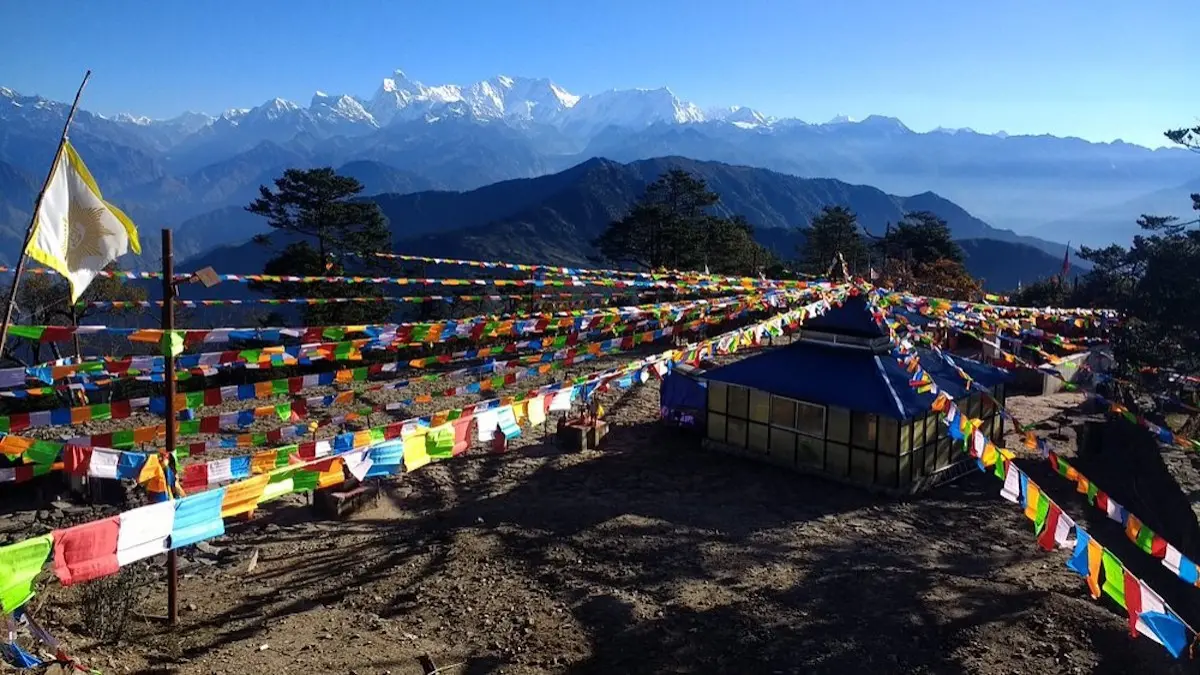
You will see monasteries, stupas, chortens, and prayer flags throughout the trail. These religious symbols complete the landscapes.

Locals are friendly. They don't have much to offer in this remote part of the Himalayas, but they never hesitate to share what is available.

Overnight stays in simple teahouses:

The accommodation and services for trekkers are very limited on the Kanchenjunga Circuit route. You will spend nights in very simple teahouses that offer twin-shared rooms and common washrooms.

The rooms are small, usually with one window and two beds. Likewise, a hot shower and charging come at an extra cost.

Trekkers are recommended to pack everything that may be needed during the trek, including snacks, spare batteries, soap, toilet paper, etc.

Simple food:

Food options are limited on the Kanchenjunga Circuit trek route. You will have better mela options in villages at a lower altitude. However, at upper altitudes, food options are fewer.

You will mostly have dal bhat, thukpa, Tibetan bread, momo, pasta, noodles, boiled potatoes, eggs, tea, coffee, hot chocolate, oats, pudding, pancake, etc.

Likewise, there are not many packaged snack options available, so we recommend that trekkers buy their snacks for the journey in Kathmandu.

Six hours of walking daily:

You may walk 6 hours a day during the Kanchenjunga Circuit trek. Some days are longer and require almost 8 to 9 hours of walking. Therefore, trekkers need to be in good shape and eat ample food daily to maintain their energy.

No network:

There is no network on the Kanchenjunga Circuit trek route. We stay in touch with the group via satellite phone. We recommend trekkers to pre-inform their family about their trek schedule and prepare their minds to go off-grid.

Altitude consideration:

You will gain around 500 meters every day during the Kanchenjunga Circuit trek. Altitude sickness risk begins above 2,500 meters, and once you go above 3,000 meters, you will begin to feel the effects of high altitude.

Low oxygen levels will make trekking challenging. So, you have to acclimatize. For that, follow our acclimatization plan and altitude sickness preventive measures that we have shared in the Useful Information section.

The mountain passes:

On the Kanchenjunga Circuit trek 21 days, you will cross two mountain passes: Sinion La Pass (4,450 m/14,560 ft) and Sinelapche La Pass (4,830 m/15,846 ft). On top of that, you will cross both these passes on the same day (on the 15th day of the trek).

To reach Kanchenjunga South Base Camp, you have to cross both these passes. Crossing these passes on the same day will be very strenuous, but with patience, determination, and our guide's support, you will conquer them.

The north and south Kanchengunja base camps:

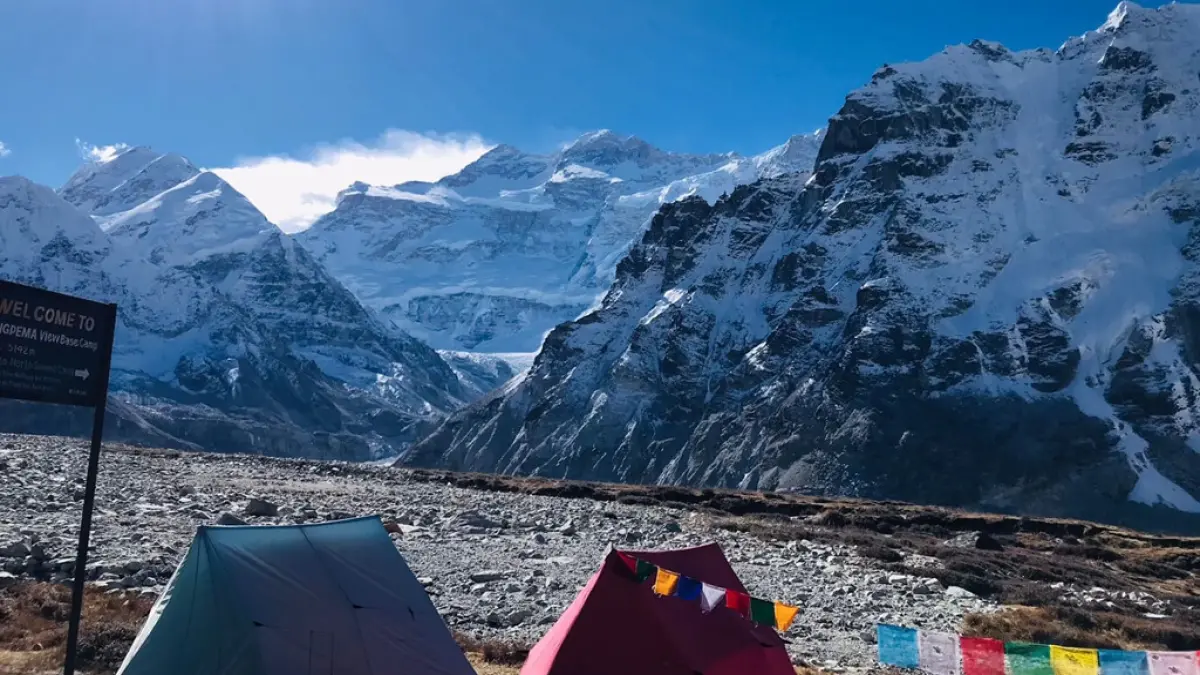
The Kanchenjunga North Base Camp (5,143 m/16,873 ft) and Kanchenjunga South Base Camp (4,730 m/15,518 ft) are two main highlights of the Kanchenjunga Circuit trek.

The north base camp is known as Pangpema, and the south base camp is known as Oktang in the Nepali language. The whole Kanchenjunga Circuit trek revolves around trekking to both of these base camps.

Kanchenjunga Circuit trek cost & booking

The Kanchenjunga Circuit trek is a very tempting option, especially if you are looking for something unique and extra in the Himalayas. But this adventurous trek comes at a cost of hard walking and spending time away from bustling cities.

If you are ready to embark on a once-in-a-lifetime trekking expedition to Mount Kanchenjunga, then do not wait and book your Kanchenjunga Circuit trek 2026 trip early.

We have an early bird offer going for the Kanchenjunga Circuit trek 2026. Our Kanchenjunga Circuit trek cost is already affordable. On top of that, you will receive a special discount that will make this trip even more valuable.

Feel free to contact us if you need any assistance or have questions about the Kanchenjunga Circuit trek package.

Why do the Kanchenjunga Circuit trek with Adventure Magic Treks?

You would like a professional and experienced person to handle the meticulous planning and preparation for the Kanchenjunga Circuit trek. We, Adventure Magic Treks, excel in organizing offbeat treks such as the Kanchenjunga Circuit.

Our team has previously handled groups for the Kanchenjunga Circuit trek, so they know what they are doing. Likewise, we also have a guide and a porter who are experienced on the Kanchenjunga Circuit.

Apart from a very experienced team, you will get the following benefits by doing the Kanchenjunga Circuit trek with us:

  • Best Kanchenjunga Circuit trek cost and service
  • A professional guide and porter
  • Well-planned itinerary that is flexible to customize
  • 24/7 support
  • No hidden charges
  • Complimentary airport pick up and drop off
  • Free duffel bag and down jacket to use during the trek
  • Trek certificate

Kanchenjunga Circuit Trek Detailed Itinerary

1Day

Arrival in Kathmandu and transfer to your hotel

Adventure Magic Treks representatives will welcome you at the Kathmandu Airport. You will travel to the hotel in a private vehicle. Depending on the traffic, it will take you 15 to 25 minutes to reach the hotel from the airport.

Rest for a bit and later meet us for the trek briefing. We will meet either in your hotel lobby or at our office. After the trek briefing, you are free to buy trek essentials and pack a duffel bag.

Meals: Null
Accommodation: Hotel
2Day

Fly from Kathmandu to Bhadrapur and drive to Fikkal/Kanyam

From Kathmandu, you will fly to Bhadrapur. It will be a scenic flight. In Bhadrapur, we will hop on a mountain jeep and drive to Fikkal. The ride will be scenic and smooth.

Max Altitude: 1,500 m/4,921 ft
Meals: Breakfast, lunch, and dinner
Duration: 45-60 minutes flight & 3-4 hours drive
Accommodation: Teahouse
Mode of Transportation: Domestic flight & drive
3Day

Drive from Fikkal/Kanyam to Taplejung

From Fikkal, you will drive northeast to Taplejung. The road is paved most of the way, but some sections are graveled. The road goes along rolling hills, terraces, and small villages.

Max Altitude: 1,820 m/5,971 ft
Meals: Breakfast, lunch, and dinner
Duration: 4-5 hours
Accommodation: Hotel
Mode of Transportation: Drive
4Day

Trek from Taplejung to Sekathum

Today is the first day of the trek. From Taplejung, you will trek to Sekathum. The trail descends to the Tamor River Valley and follows an uphill route that goes along Ghunsan Khola. You will then descend through steep terrain and pass by a subtropical forest to Sekathum.

Max Altitude: 1,650 m/5,413 ft
Meals: Breakfast, lunch, and dinner
Duration: 5-6 hours
Accommodation: Teahouse
5Day

Trek from Sekathum to Amjilosa

Following the Ghunsa Khola, the trail steeply ascends through dense rhododendron and bamboo forests. You will cross many suspension bridges on the way.


Some sections of the trail go along a narrow cliffside. This area is home to wildlife such as red pandas, langurs, and Himalayan monals, but spotting them is quite rare. On the way, you may also see yak herders.

Max Altitude: 2,510 m/8,235 ft
Meals: Breakfast, lunch, and dinner
Duration: 6-7 hours
Accommodation: Teahouse
6Day

Trek from Amjilosa to Gyabla

From Amjilosa, the trail goes through a forest of bamboo, rhododendron, pine, and oak. You can see yaks, sheep, and goats on the way. The scenery is also beautiful and quiet. On the way to Gyabla, you will also cross a wooden bridge.

Max Altitude: 2,730 m/8,956 ft
Meals: Breakfast, lunch, and dinner
Duration: 3-4 hours
Accommodation: Teahouse
7Day

Trek from Gyabla to Ghunsa

The trail goes through the forest and passes by Phale village. It used to be a Tibetan refugee camp established decades ago when Tibetans began fleeing from the communist regime in China.

Now, Phale village is a winter settlement. From here, the trail continues to Ghunsa, which is a bigger village with a health post and police station.

Max Altitude: 3,505 m/11,499 ft
Meals: Breakfast, lunch, and dinner
Duration: 4 hours
Accommodation: Teahouse
8Day

Acclimatization day: hike to a nearby monastery and a ridge

In Ghunsa, you will take an acclimatization break. Early in the morning, hike to a nearby monastery and a ridge. From the ridge, you will get to see a stunning view of Jannu Peak. After the hike, return to Ghunsa to spend the night.

Meals: Breakfast, lunch, and dinner
Accommodation: Teahouse
9Day

Trek from Ghunsa to Kambachen

Enjoying the captivating view of Jannu Peak, you will ascend to Kambachen. The trail goes through a green glacier valley. On the way, you may get to see blue sheep.

It is also a snow leopard area, so keep your eyes open. Soon, the trail goes past a lovely waterfall and a landslide-prone area before leading you to Kambachen.

Max Altitude: 4,100 m/13,451 ft
Meals: Breakfast, lunch, and dinner
Duration: 4 hours
Accommodation: Teahouse
10Day

Acclimatization day: hike to a nearby ridge

We take another acclimatization break in Kambachen. It is important that you are acclimatized before reaching Kanchenjunga's north and south base camps to avoid altitude sickness. For the acclimatization hike, you will climb another nearby ridge.

Meals: Breakfast, lunch, and dinner
Accommodation: Teahouse
11Day

Trek from Kambachen to Lhonak

From Kambachen, you will trek mainly over moraine. The trail ascends over large boulders and passes by summer yak pastures. There is no settlement on this route, so we will carry a packed lunch. It is also a snow leopard area, so keep your eyes open.

Max Altitude: 4,785 m/15,699 ft
Meals: Breakfast, lunch, and dinner
Duration: 4 hours
Accommodation: Teahouse
12Day

Day trip to Kanchenjunga North Base Camp

Today, you will hike to Kanchenjunga North Base Camp. Following steep, rocky trails, you will ascend to the north base camp. The north base camp offers views of towering mountains, including Tent Peak and Chang Himal, as well as glaciers.

*Kanchenjunga North Base Camp is called Pangpema in the local language. There is no teahouse in Pangpema, so you will return to Lhonak to spend the night.

Max Altitude: 5,143 m/16,873 ft
Meals: Breakfast, lunch, and dinner
Accommodation: Teahouse
13Day

Trek from Lhonak to Ghunsa

Leaving Lhonak, you will retrace the same trail back to Kambachen. Then, you will descend to Phale village and walk downhill through lush forested hills to Ghunsa.

Max Altitude: 3,595 m/11,794 ft
Meals: Breakfast, lunch, and dinner
Duration: 7 hours
Accommodation: Teahouse
14Day

Trek from Ghunsa to Sele Le

The journey now continues towards the Kanchenjunga South Base Camp. On this day, you hike to Sele Le. The trail goes through forested hills and grassy ridges. You will pass by Phole settlement before reaching Sele Le. The view of Mt. Makalu is excellent on this part of the trail.

Max Altitude: 4,390 m/14,403 ft
Meals: Breakfast, lunch, and dinner
Duration: 5 hours
Accommodation: Teahouse
15Day

Trek from Sele Le to Cheram, crossing Sinion La Pass (4,450 m/14,560 ft) and Sinelapche La Pass (4,830 m/15,846 ft)

Start the day with a delicious breakfast and gradually ascend to Sinion La Pass (4,450 m). Then the trail ascends along a ridge and leads you to Sinelapche La Pass (4,830 m). From the pass, you will descend to Cheram.

*Witness a wonderful view of Mt. Kanchenjunga from both passes.

Max Altitude: 3,870 m/12,697 ft
Meals: Breakfast, lunch, and dinner
Duration: 7-8 hours
Accommodation: Teahouse
16Day

Day trip to Kanchenjunga South Base Camp to Ramche (4,580 m/15,026 ft)

From Cheram, you will hike to the Kanchenjunga South Base Camp. It will be another challenging hike due to high altitude, thin air, and steep terrain. But the view from the south base camp will make the walk worth it.

The Kanchenjunga South Base Camp is located right on the edge of a glacier and is festooned with colorful prayer flags. After exploring the south base camp, you will descend to Ramche for the night.

Max Altitude: 4,730 m/15,518 ft
Meals: Breakfast, lunch, and dinner
Duration: 6 hours
Accommodation: Teahouse
17Day

Trek from Ramche to Torongding

Leaving Ramche, you will trek through dense rhododendron and pine forests. The trail descends all the way to Torongding. The vegetation gets dense as you walk downhill.

You may get to see different birds and wildlife, like the red panda and barking deer. Note that spotting wild animals is quite rare around human paths.

Max Altitude: 2,080 m/6,824 ft
Meals: Breakfast, lunch, and dinner
Duration: 4 hours
Accommodation: Teahouse
18Day

Trek from Torongding to Rani Pul

It is your last day of the trek. You will hike downhill and pass by lush hills. The trail goes through terraced fields and a few settlements.

Max Altitude: 1,430 m/4,691 ft
Meals: Breakfast, lunch, and dinner
Duration: 6-7 hours
Accommodation: Teahouse
19Day

Drive from Rani Pul to Taplejung

From Rani Pul, you will drive to Taplejung. It will be a bumpy ride but very memorable. The road follows the Kabeli River and passes by farmlands and green ridges. Enjoy a hot shower and other amenities in Taplejung.

Max Altitude: 1,820 m/5,971 ft
Meals: Breakfast, lunch, and dinner
Duration: 4-5 hours
Accommodation: Hotel
Mode of Transportation: Drive
20Day

Fly from Taplejung to Kathmandu

Today, you will fly to Kathmandu. Our team will transfer you to the hotel upon landing in Kathmandu. There is nothing planned for the remaining day, so you can spend it as you wish.

Max Altitude: 1,324 m/4,344 ft
Meals: Breakfast only
Duration: 50 minutes
Accommodation: Hotel
21Day

Final departure

You fly back to your home on this day. Our team will drop you off at the international airport in Kathmandu.

Meals: Breakfast only
Still Confused? Let Us Guide You
No worries — we’re here to help. Whether you have questions or just need a bit more clarity, feel free to reach out. Our team is ready to guide you every step of the way.

Kanchenjunga Circuit Trek Cost

What’s Included

  • Airport pick-ups and drop-offs by private four-wheeler
  • Deluxe twin-sharing accommodation in Kathmandu
  • All local transportation
  • All transportation as per the itinerary
  • Three meals (breakfast, lunch, and dinner with tea/coffee) a day during the trek
  • Teahouse accommodation during trekking
  • Licensed Nepali guide and porter (one porter for two trekkers)
  • Accommodation, food, allowance, and high altitude insurance for the guide and porter
  • Kanchenjunga Restricted Area Entry Permit
  • Kanchenjunga Conservation Area Project (KCAP) Permit
  • Down jacket and a four-season sleeping bag
  • Exclusive first-aid kit
  • Trip achievement certificate
  • All government taxes and service charges

What’s Excluded

  • International flight to/from Kathmandu
  • Travel insurance (must cover helicopter evacuation and medical bills)
  • Lunch and dinner in Kathmandu
  • Trekking clothes and gear
  • Shopping and souvenirs
  • Tips for driver, guide, and porter
  • Bar bills, water bottles, and other beverages
  • Departure taxes
  • Any expenses not mentioned in our cost include section

Dates and Availability

Select Departure Date
  • Guaranteed departures
  • Customize the Kanchenjunga Circuit trek itinerary 
  • Private and group departures available

Equipment Lists

Download Equipment Lists

Essential Information

Trekking with a guide and porter

Guides and porters ease the journey with their assistance and also ensure your safety. On top of that, restricted areas like Kanchenjunga compulsorily require a licensed Nepali guide. So, you cannot do the Kanchenjunga Circuit trek without a guide.

Porter is your choice, but we highly recommend having a porter. They help you carry big duffel bags and make navigating offbeat terrain safe. You will be free to enjoy the views and the journey to the fullest.

How much should you tip your guide and porter?

Tipping guides and porters is encouraged to help them financially and also motivate them to do better. You can tip as much as you wish.

We recommend tipping 15% to 25% of the package cost. Trekking in groups can tip collectively, but every trekker should contribute to it.

Kanchenjunga Circuit trek accommodation

The accommodation is pretty basic on the Kanchenjunga Circuit trek route. You will spend nights in simple teahouses along the trail. Rooms will be shared between two trekkers. Washrooms are mostly built outside the main building.

Sharing the bathrooms and rooms is quite common during the Kanchenjunga Circuit trek. There are not many services in the teahouses on the Kanchenjunga Circuit trek route.

Do not expect amenities like on Annapurna or Everest trek routes or even Manaslu trails. You will get comfortable, warm beds, but a sleeping bag is a must for this trek.

Likewise, it is best to pack all essentials such as a solar power bank, wet tissues, toilet papers, etc, for this trek. Our Kanchenjunga Circuit trek package also includes hotel accommodation in Kathmandu as per our itinerary.

What kind of food is available on the Kanchenjunga Circuit trek?

We provide three meals a day during trekking. In Kathmandu, you only get breakfast in our Kanchenjunga Circuit trek package. So, budget money for lunch and dinners in Kathmandu.

Likewise, we also recommend you carry some money to buy extra food and drinks during trekking. Food options are also limited on the Kanchenjunga Circuit trek route.

You will mainly eat dal bhat, potatoes, pasta, thukpa, thenduk, Tibetan bread, pancake, porridge, stew, momo, and noodles on this trek. Eggs, bread, jam, tea, and coffee are also available.

Similarly, you can purchase boiled water for drinking in teahouses. Bring water purification tablets for more safety. Pack ample snacks and munchies for the trek.

Kanchenjunga Circuit trek difficulty

The Kanchenjunga Circuit is a remote, isolated, and strenuous trek route. This trek demands strong fitness, mental endurance, and adaptability. It is an offbeat, high-altitude trek. So, you will be pushing yourself a lot.

Along with that, the trekking infrastructure is not good on the Kanchenjunga Circuit trek. Trekkers have to adjust a lot. Overall, the trek is around 220 kilometers, so you will spend quite a long time in the mountains.

The trail crosses two mountain passes around 4,500 meters and navigates glacial moraines. Most of the trail is steep and rough. So, you will need a lot of energy to trek from one village to another.

Along with that, the altitude rises every day, which will make trekking further more challenging. So in short, the Kanchenjunga Circuit trek is tough and only recommended to experienced trekkers with strong fitness and determination.

Altitude sickness and how to avoid it

The highest point of the Kanchenjunga Circuit trek is Kanchenjunga North Base Camp at 5,143 meters (16,873 ft). With the increase in elevation, the climate gets colder and the oxygen level drops.

Note that oxygen level does not drop significantly, but it will make long walking tough because you may get tired quickly. Likewise, there is also a risk of altitude sickness on this trek.

One of the top requirements for the Kanchenjunga Circuit trek is previous high altitude experience. It lowers the risk of altitude sickness. On top of that, if you ascend slowly and keep yourself hydrated, the risk of altitude sickness decreases.

We also recommend that you have ample food, sleep 8 hours a day, listen to your body, and avoid alcohol and smoking during ascent. In short, you have to be in good condition every day to not only complete the trek but also enjoy it.

Travel insurance for the Kanchenjunga Circuit trek

To do a restricted area trek in Nepal, including the Kanchenjunga Circuit, all non-Nepali trekkers need travel insurance that covers emergency helicopter evacuation.

Without this coverage, you are not allowed to start the trek. Get the travel insurance and send us a copy. You can also cover other things such as medical bills, trip cancellation, etc, in your travel insurance.

*It is best to purchase travel insurance in your country.

Kanchenjunga Circuit trek permit

For the Kanchenjunga Circuit trek, you will need the Kanchenjunga Conservation Area Project (KCAP) permit and a Restricted Area Permit (RAP for Kanchenjunga).

Only a registered Nepali trekking company like us can help you obtain the Restricted Area Permit. Tourists cannot get this permit by themselves or with the help of an independent Nepali guide

In short, your Kanchenjunga Circuit trek must be organized by an authorized Nepali trekking company.

  • Kanchenjunga Conservation Area Project (KCAP) permit cost: USD 20 per person
  • Restricted Area Permit (RAP for Kanchenjunga) cost: USD 20 per person per week for the first four weeks, then USD 25 per person per week for each additional week

Kanchenjunga Circuit trek best time

Spring (March-May) and autumn (September-November) are the best times to do the Kanchenjunga Circuit trek. It is because these two seasons have stable weather and a pleasant climate. The Kanchenjunga Circuit trek route is in good condition to traverse.

There is less risk of rainfall and snowfall. You will not experience too hot or too cold a climate. Daytime is usually warm compared to nights and mornings. Likewise, the mountain vistas are stunning throughout the trail.

You will also enjoy breathtaking landscapes in these two seasons. The best thing is that the Kanchenjunga Circuit trek route remains peaceful even during the peak trekking seasons. So, if peace is your priority, this trek is perfect for you.

Communication during the Kanchenjunga Circuit trek

There is no network on the Kanchenjunga Circuit trek route. WiFi is also not available in most places. It is an off-grid trek, so prepare accordingly. We stay in touch with you through satellite phone during the trek.

Charging and hot showers

You have to pay a few bucks to charge your device in the teahouses. It is best to carry a solar power bank and spare batteries for this trek.

Likewise, a hot shower also costs a few bucks. Once you go above 3,000 meters, taking a shower is not recommended (at least frequently).

Clothes do not dry in a day, and a cold climate makes bathing difficult. Instead, use wet tissue to keep yourself refreshed.

Nepal travel visa

Our Kanchenjunga Circuit trek package does not include a Nepal travel visa. All non-Nepali travelers have to get a travel visa to enter the trek. An on-arrival travel visa is available at Kathmandu Airport.

For an on-arrival travel visa, you will need a valid passport, your passport-sized photo, and a visa fee. Citizens of a few countries cannot obtain the on-arrival travel visa.

They have to get it from the Nepalese Embassy or Consulate Office in their country. You can check more details on this official visa page of the Nepal government.

Kanchenjunga Circuit Trek FAQs

Q1.

How difficult is the Kanchenjunga Circuit trek?

The Kanchenjunga Circuit trek is strenuous. It is not a beginner-friendly trek. This trek is very challenging and demands strong fitness and previous trek experience. It is an offbeat trek that offers a raw Himalayan experience.

Q2.

How long does the Kanchenjunga Circuit trek take to complete?

The Kanchenjunga Circuit is a long trek in Nepal. Following our itinerary, you can complete this trek in 21 days. You can also customize the itinerary as per your timing.

Q3.

What is the best time to trek the Kanchenjunga Circuit?

The best time to trek the Kanchenjunga Circuit is spring (March to May) and autumn (September to November). The weather remains quite unpredictable till mid-September, so keep in mind while booking the trek.

Q4.

Do I need a special permit for the Kanchenjunga Circuit trek?

Yes, you need a special restricted area permit for the Kanchenjunga region to do the Kanchenjunga Circuit trek.

Q5.

Is a guide mandatory for trekking in the Kanchenjunga region?

Yes, a guide is mandatory for trekking in the Kanchenjunga region. Moreover, you need a local Nepali trekking guide who is authorized to lead groups in the restricted areas in Nepal.

Q6.

How much does the Kanchenjunga Circuit trek cost?

The Kanchenjunga Circuit trek cost starts at USD 1,900 and may cost more or less. The Kanchenjunga Circuit trek itinerary, group size, and services determine the package cost.

Q7.

Are there tea houses available, or is camping required for the Kanchenjunga Circuit trek?

Teahouses are available on the Kanchenjunga Circuit trek route, so camping is not required. There is not much service available in teahouses, so trekkers are advised to carry all the essentials for the journey.

Q8.

How is the mobile network and internet availability in the Kanchenjunga region?

You will go off-grid during the Kanchenjunga Circuit trek. There is no mobile network or WiFi in this region. You will get a connection in a few villages at a lower elevation.

Q9.

Is the Kanchenjunga region safe for solo trekkers?

Solo trekking is not allowed in the Kanchenjunga region because it is a restricted area in Nepal for tourists. As per the rules, you have to trek with a local Nepali guide and a local trekking company like us.

Q10.

What kind of physical fitness is required for the Kanchenjunga Circuit trek?

For the Kanchenjunga Circuit trek, you have to be physically and mentally strong. From trekking for six hours a day on offbeat terrain to pushing yourself out of your comfort zone, the demands are quite high on the Kanchenjunga Circuit trek. You have to be okay with high altitude, limited services, and being alone in a remote area.

Q11.

What are the risks of altitude sickness on the Kanchenjunga trek?

The Kanchenjunga Circuit trek is a high-altitude trek that goes a little above 5,000 meters. The risk of altitude sickness increases after 2,500 meters and above 3,000 meters, where you will experience a lower oxygen level and other high-altitude effects. So, the altitude sickness risk is high, but it can also be avoided if you follow the preventive measures.

Q12.

How remote is the Kanchenjunga region?

The Kanchenjunga region is one of the untouched parts of the Himalayas that is rarely visited by trekkers. This trekking route lacks basic infrastructure for the trekkers that is available in regions like Everest and Annapurna. Coming across other trekkers, even in peak seasons, is not common on the Kanchenjunga route.

Q13.

Are there ATM facilities on the Kanchenjunga Circuit trail?

No, there are no ATM facilities on the Kanchenjunga Circuit trail. You have to withdraw money in Kathmandu for the trek.

Q14.

What wildlife can be seen in the Kanchenjunga Conservation Area?

The Kanchenjunga Conservation Area is home to a diverse array of wildlife, including rare species such as the red panda, snow leopard, Asian black bear, and musk deer. But coming across them is very, very rare. On the good side, you will get to spot many birds and vegetation along the trail.

Q15.

How cold does it get during the Kanchenjunga Circuit trek?

The higher the trail ascends, the colder the climate gets. Compared to the daytime, nights and mornings are cold. At the Kanchenjunga base camps, the temperature drops below 0 degrees Celsius. So, it is important that you are well-packed for this trek.

Q16.

How do I get to the trailhead of the Kanchenjunga trek?

The Kanchenjunga Circuit trek starts from Taplejung. From Kathmandu, you first have to fly or drive to Bhadrapur. From Bhadrapur, you can take a local bus to Fikkal. From Fikkal, it takes another 4-5 hours to drive to Taplejung.

Q17.

Is the Kanchenjunga Circuit trek less crowded than other Nepal treks?

Yes, the Kanchenjunga Circuit trek is less crowded than other treks in Nepal. Even in spring and autumn seasons, the peak trekking time in Nepal, the Kanchenjunga Circuit remains peaceful.

Q18.

Can I combine the north and south base camps in one trek?

Yes, you can combine the north and south base camps of Kanchenjunga in one trek. In fact, our Kanchenjunga Circuit trek itinerary combines hikes to both base camps.

Q19.

How are the trail conditions in the Kanchenjunga region?

In spring and autumn, the trail condition is good. However, the terrain is offbeat and includes many steep ascents and descents, rocky areas, landslide areas, and glacier moraine crossings.

Price From
US$2500
US$2600
4% Off
Group Discount Price +
  • No. of travelerPrice per person
  • 1 paxUS$2600
  • 2 - 5 paxUS$2300
  • 6 - 10 paxUS$2000